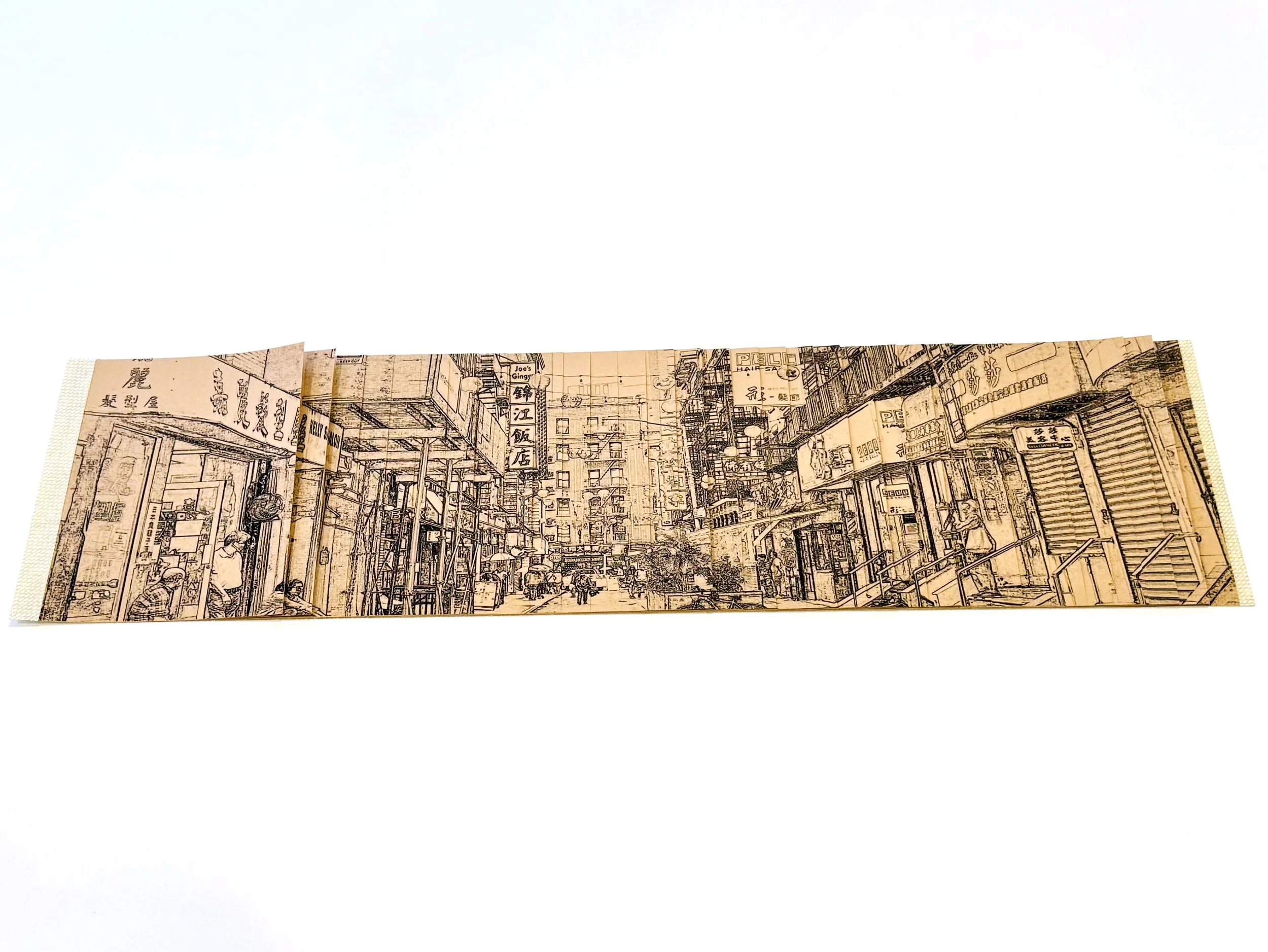
What We Keep, What Keeps Us: Chinatown, Between Thresholds
INSPIRATION
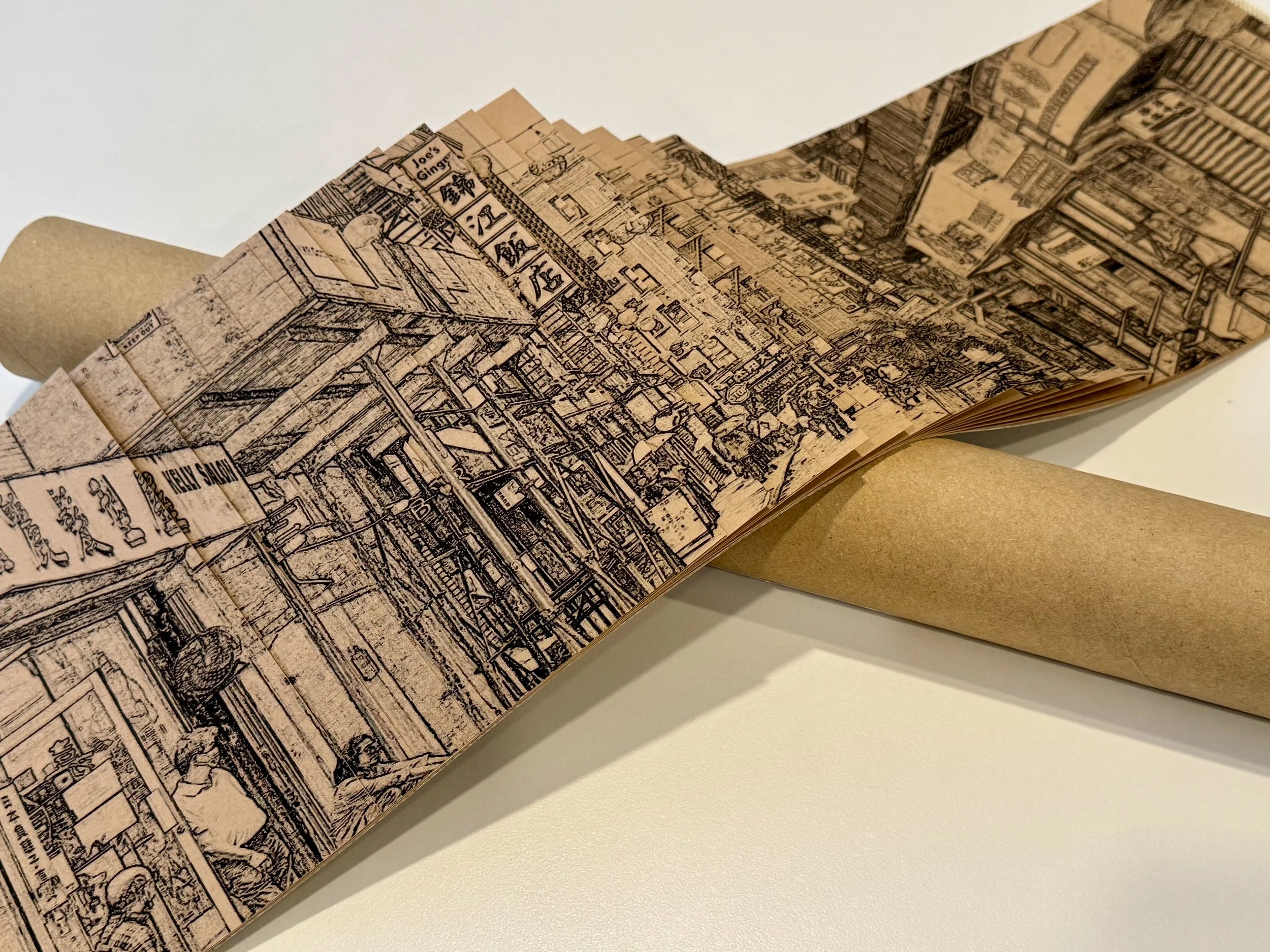
Belonging is rarely a single “place.” It is a sequence of micro-crossings repeated until they become instinct: threshold after threshold, language after language, public role after private life. This book treats Chinatown not as a backdrop, but as a living interface where those crossings accumulate into identity.
RESEARCH ABSTRACT
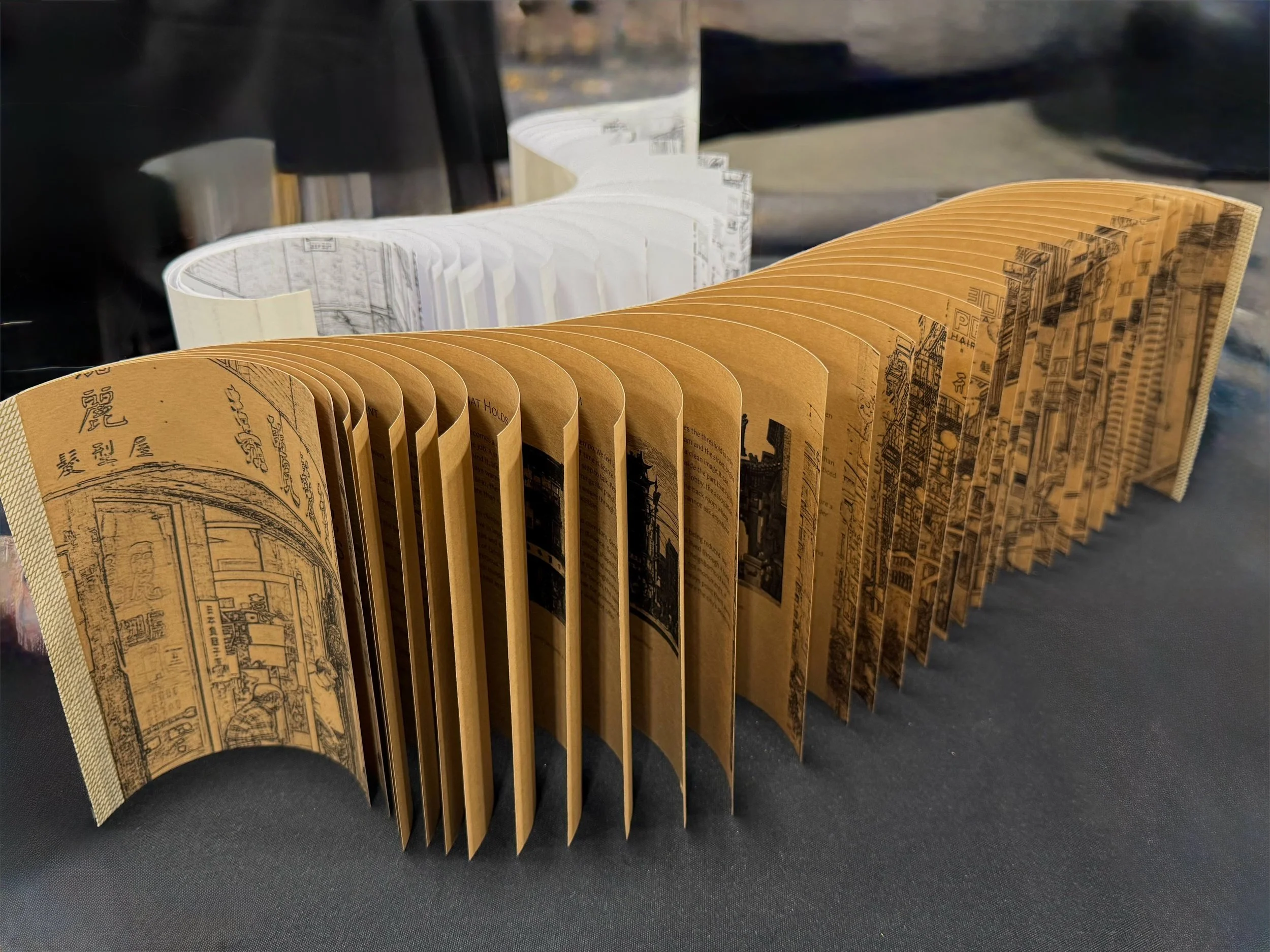
This project reads diaspora as something you move through. Chinatown is made of small crossings that repeat until they feel like home: street to shop, counter to kitchen, English to Chinese, public face to private life, old habit to new feed. The book focuses on what those crossings carry, offering not just a narrative line but a lived overlap where continuity and change share the same sidewalk. The challenge is how to show that overlap without turning it into nostalgia, spectacle, or a frozen “community portrait.” The dragon-scale binding lets memory behave as it does in life: partial, layered, revisited. Meaning emerges through the act of reading, through pacing, stacking, and comparison.
PROJECT DESCRIPTION
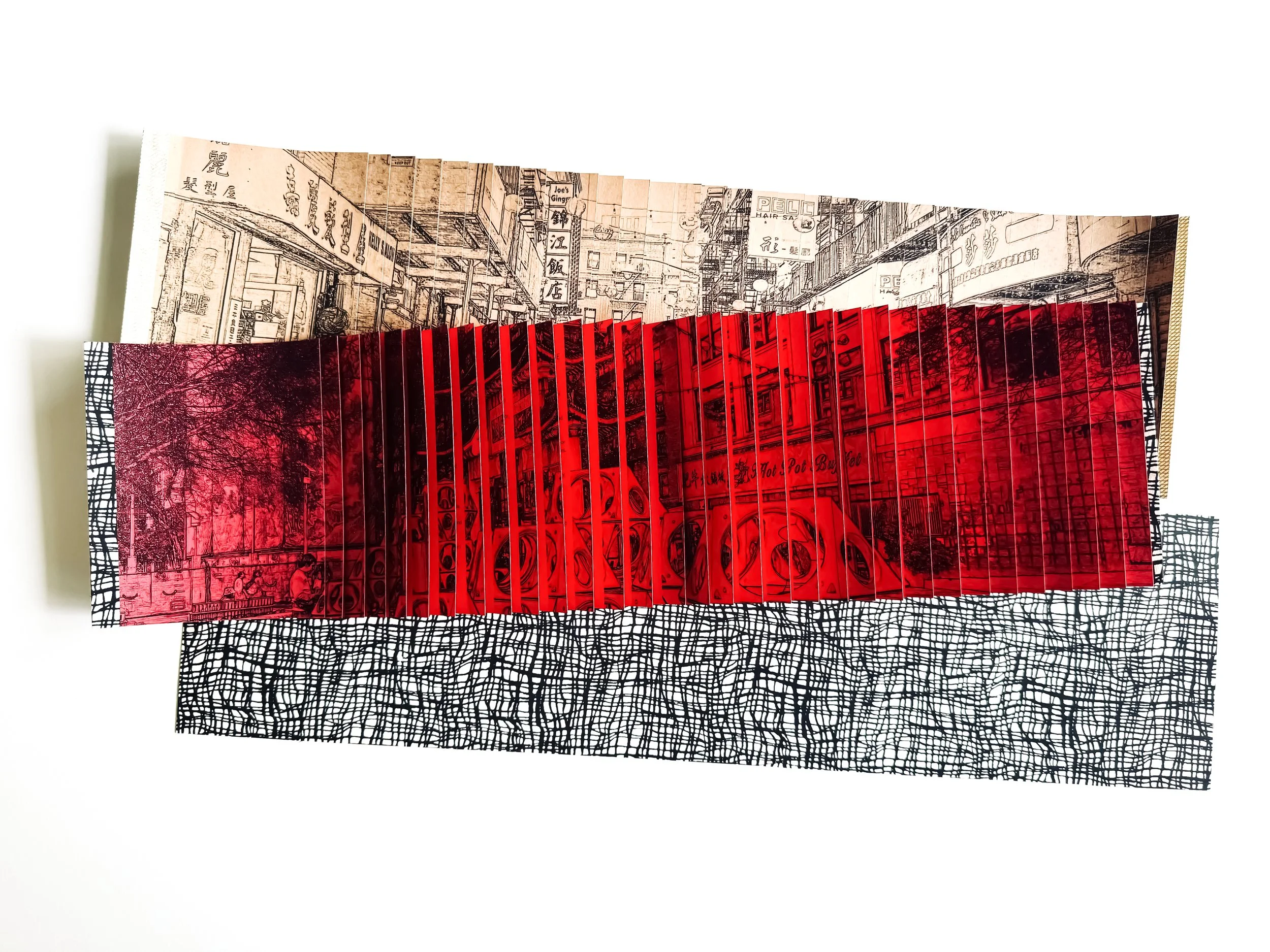
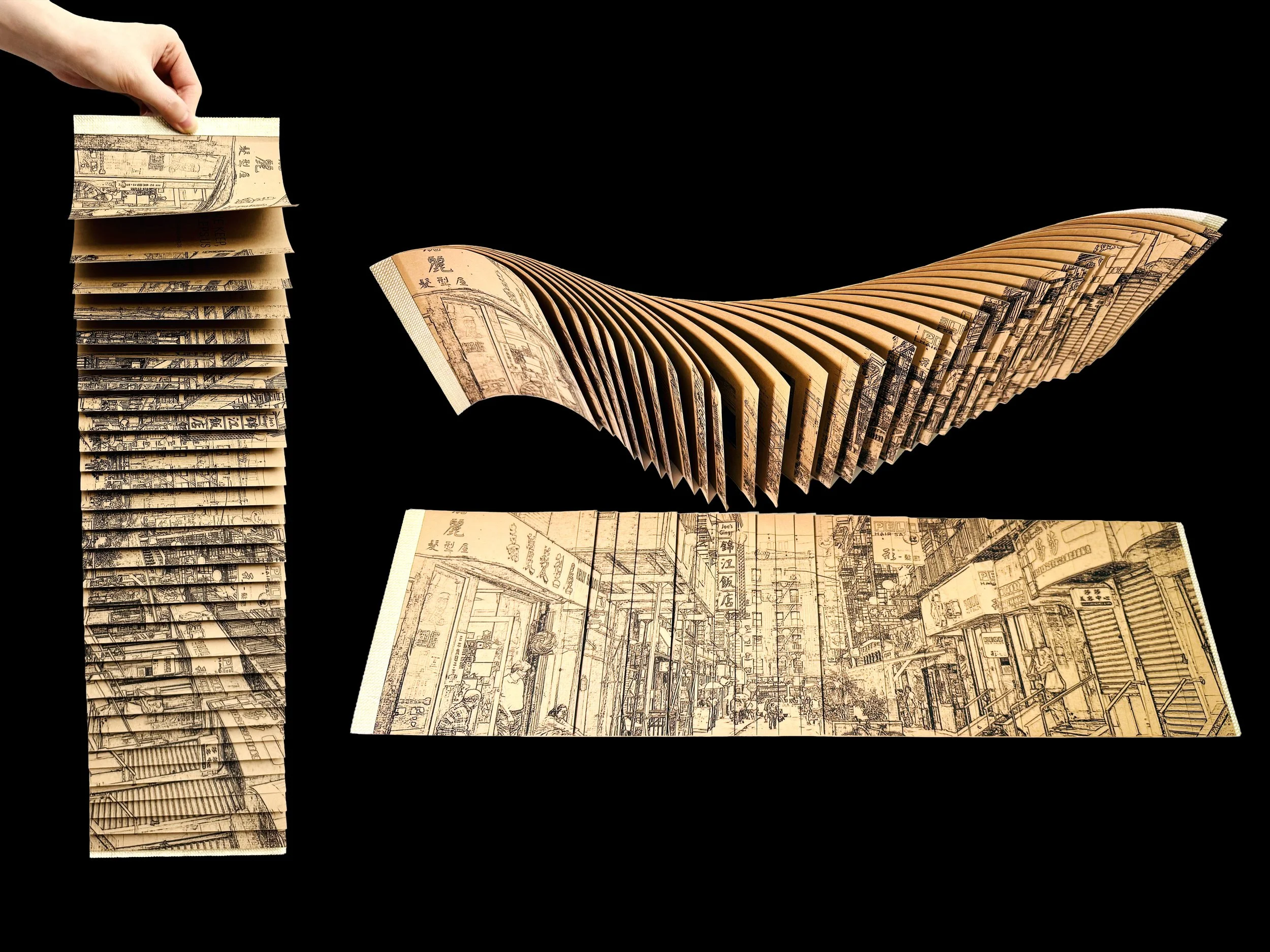
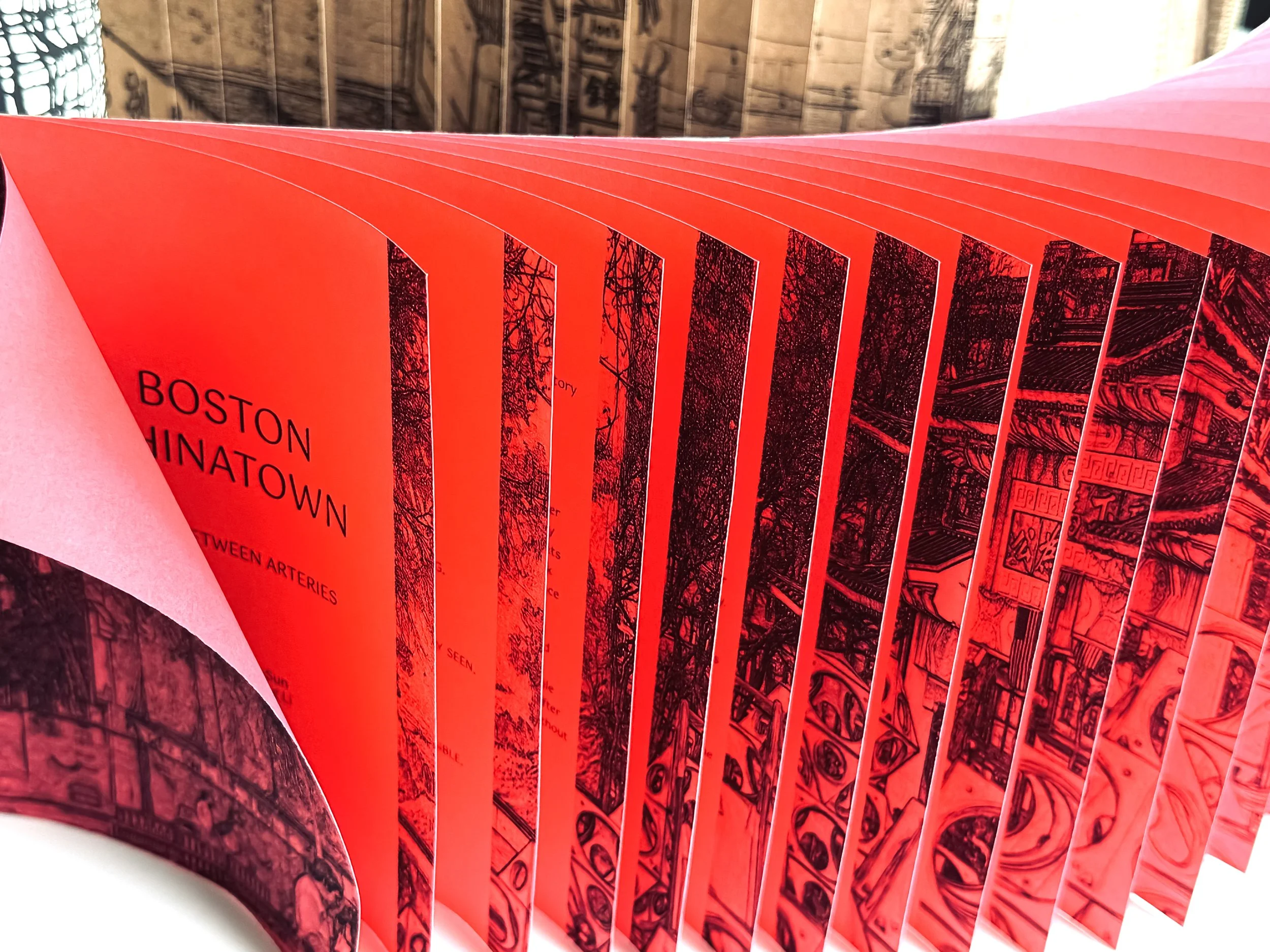
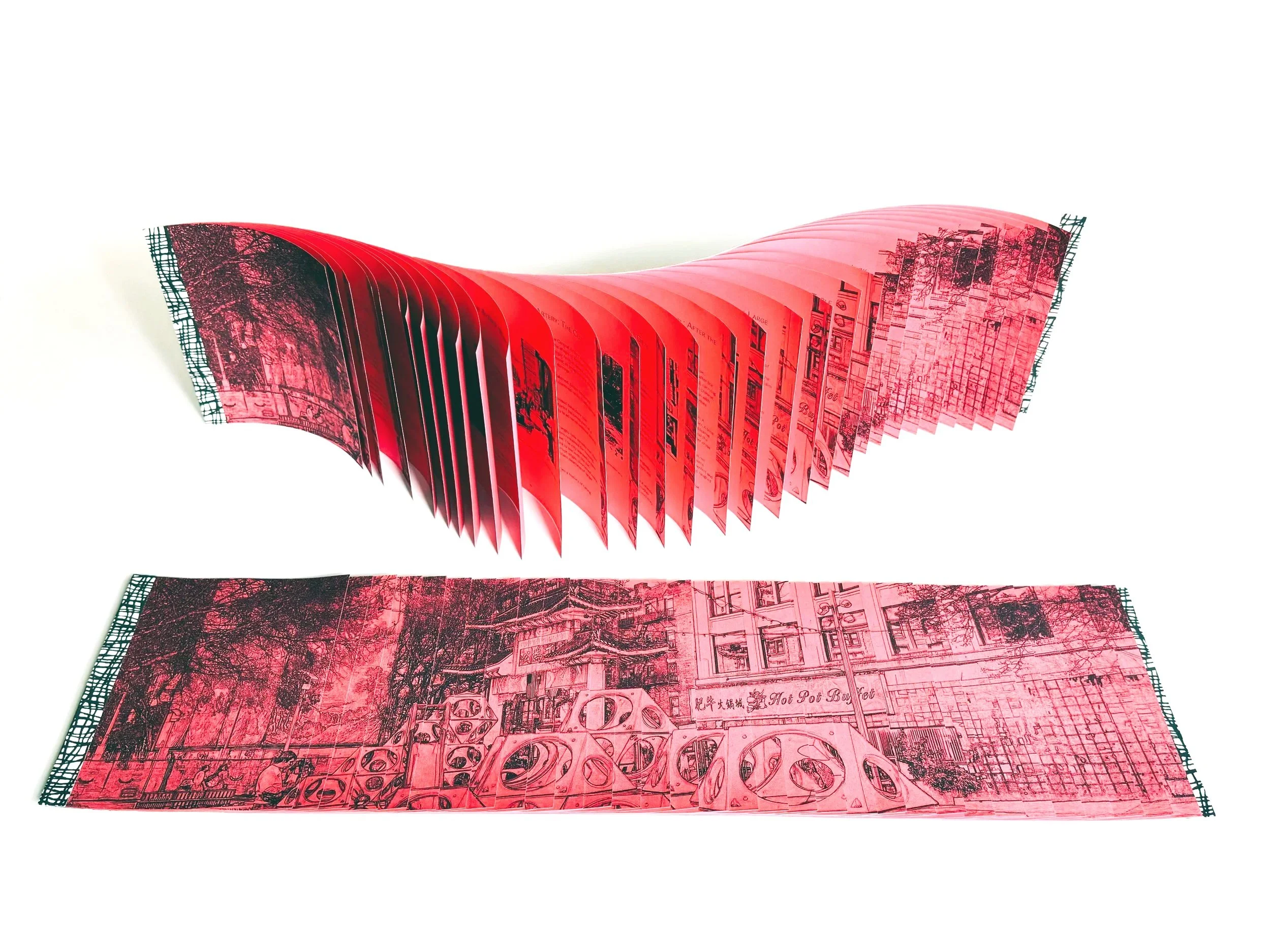
A hand-assembled, inverted dragon-scale artist book that turns diasporic memory into a spatial reading experience. Pages cascade like urban fragments, allowing Chinatown to be read as a folded city where continuity and update coexist.
OPERATION / FLOW / INTERACTION
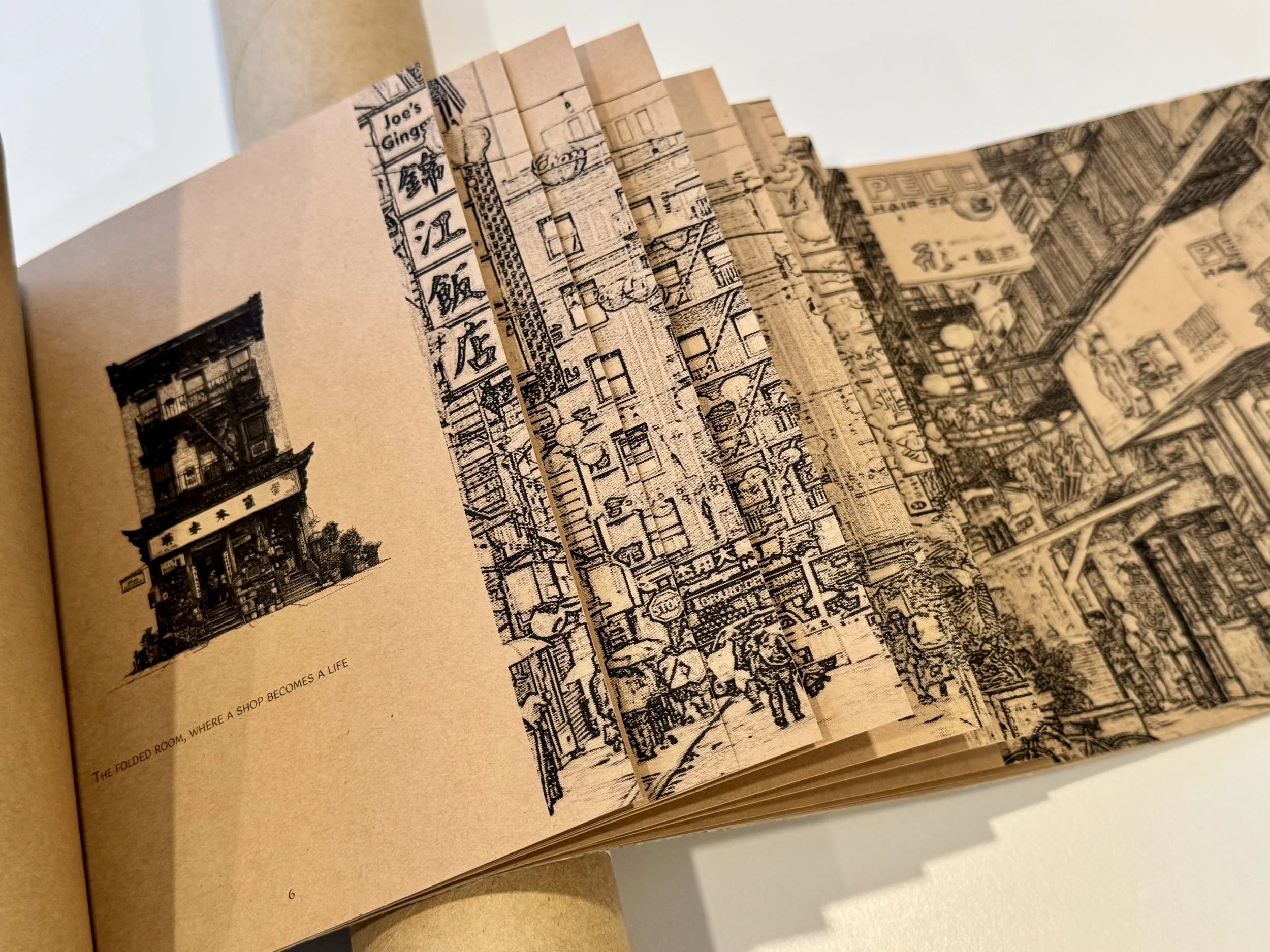
The binding produces controlled reveal and conceal, so the reader “walks” through the book by unfolding sequences rather than consuming a straight line. Readers can pause mid-cascade, stack moments, and compare layers side by side, creating a self-paced tour of shifting references and repeating thresholds. The interaction rewards rereading, not just viewing.
Boston Chinatown: Held Between Arteries
THE PROJECT IS ONGOING: “One Book for One Chinatown”
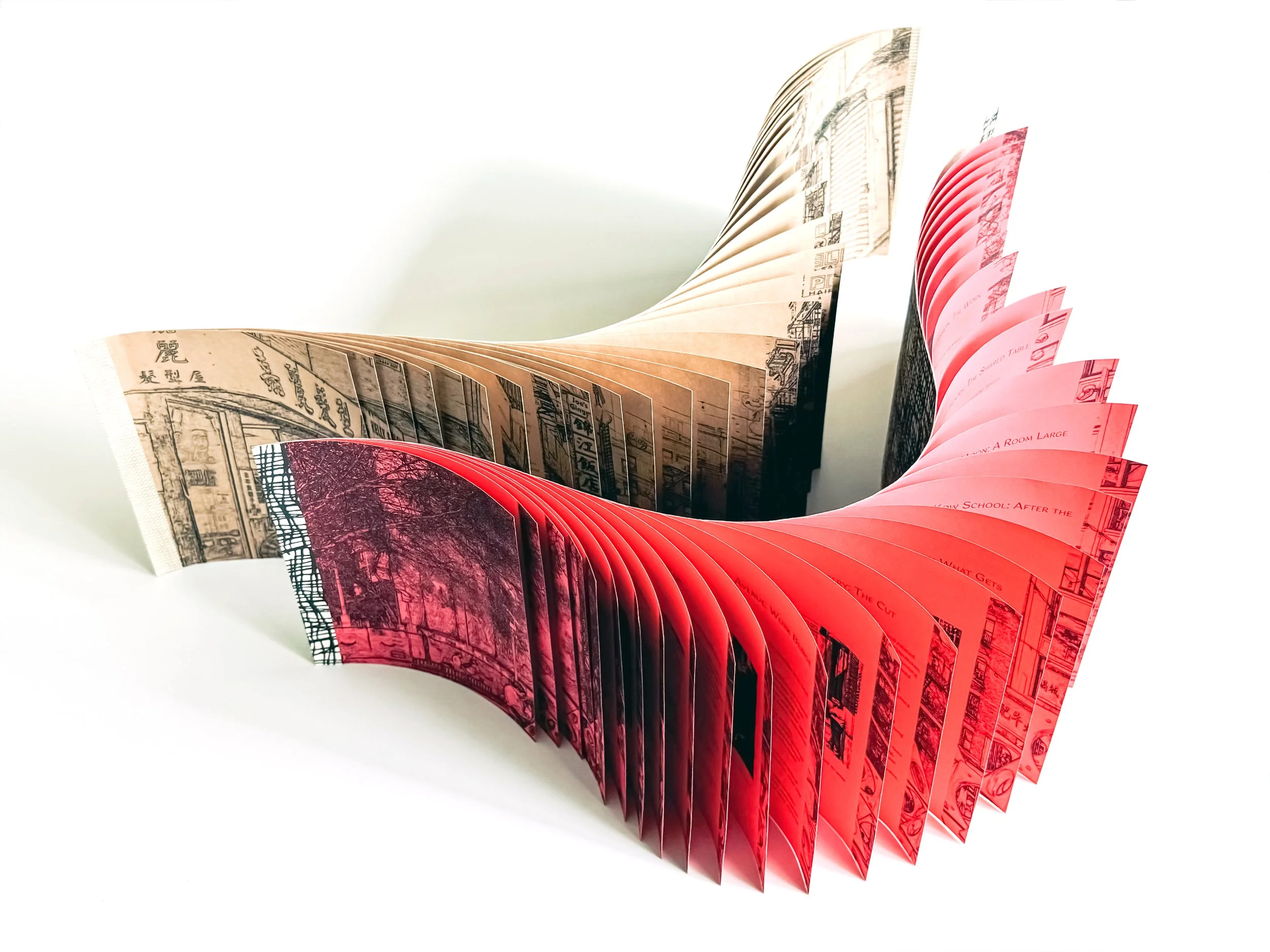
Boston Chinatown: Held Between Arteries is the second title in PEAR & MULBERRY’s ongoing Chinatown series, following What We Keep, What Keeps Us: Chinatown, Between Thresholds, which serves as a broader introduction to Chinatown as a folded city of migration, work, ritual, language, and reinvention. With the Boston volume, the series turns toward city-specific histories and spatial conditions. Future volumes will continue through other U.S. Chinatowns, including New York, San Francisco, Honolulu, and Los Angeles, each approached through its own history, urban form, and community memory.
BOSTON - DESIGN FEATURES
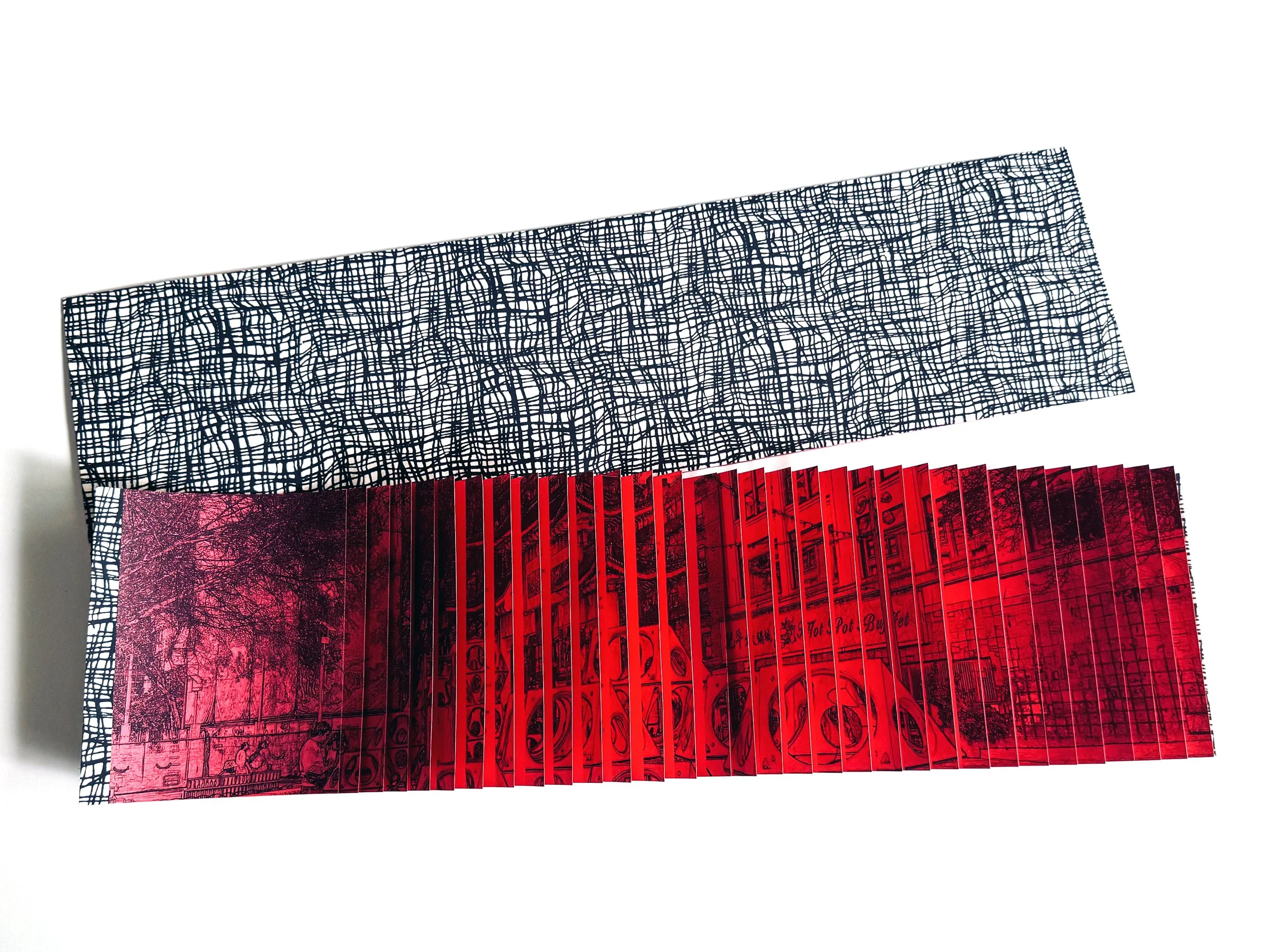
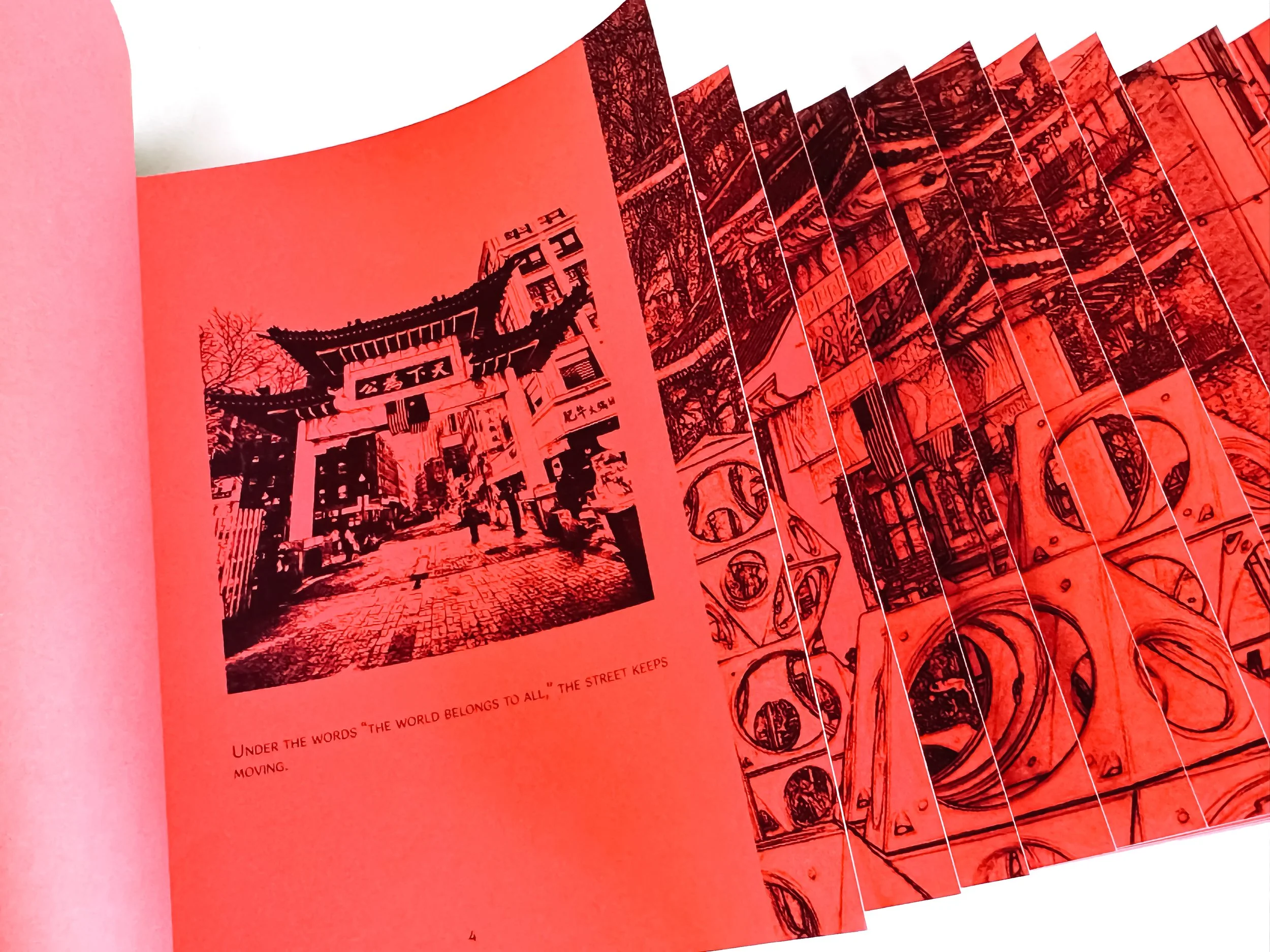
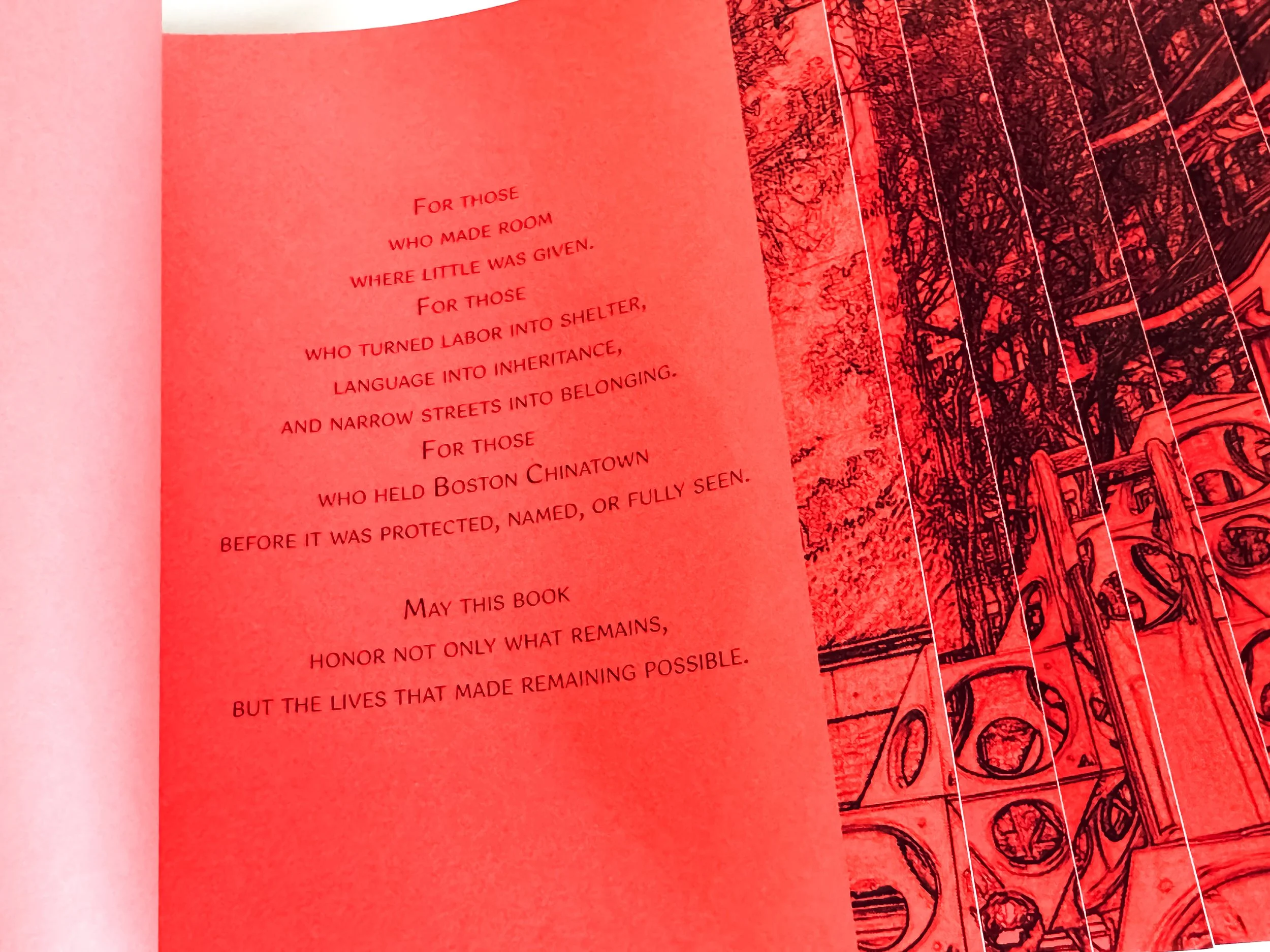
Materially, the Boston volume distinguishes itself through a curated Brick Ember red paper that echoes the city’s historic masonry, paired with a handmade back sheet carrying a high-contrast waved-line pattern. These choices give the book a specific Boston presence while maintaining the bold linocut-print graphic weight and sculptural reading experience of the series. As future city volumes join the collection, each book will carry its own local texture while remaining part of a larger visual and cultural archive.
LOCAL MEMORY
Written in a poetic documentary voice, the book looks closely at how language, labor, food, ritual, public memory, and community organizing allow Boston Chinatown to keep making room where little was given.
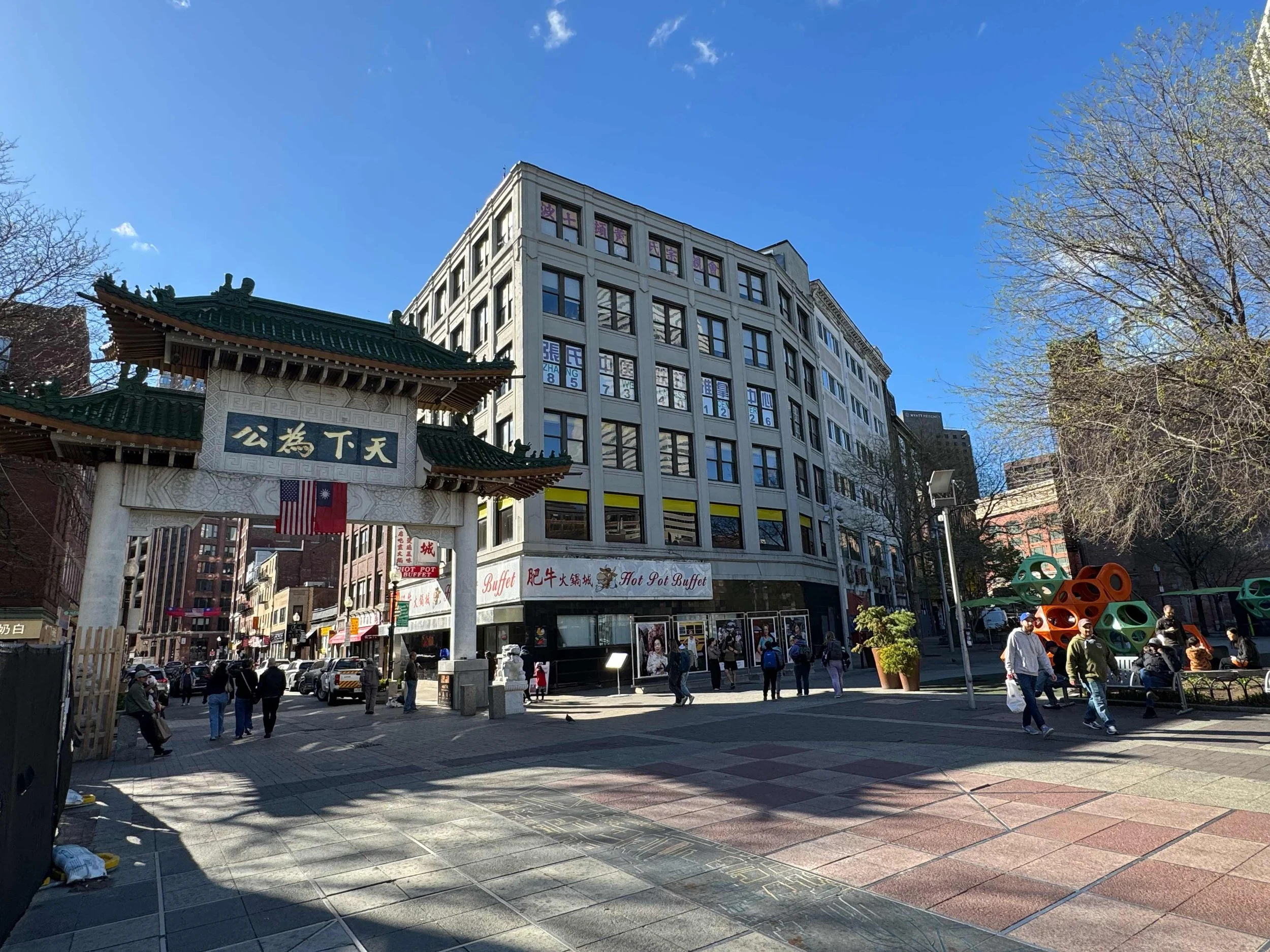
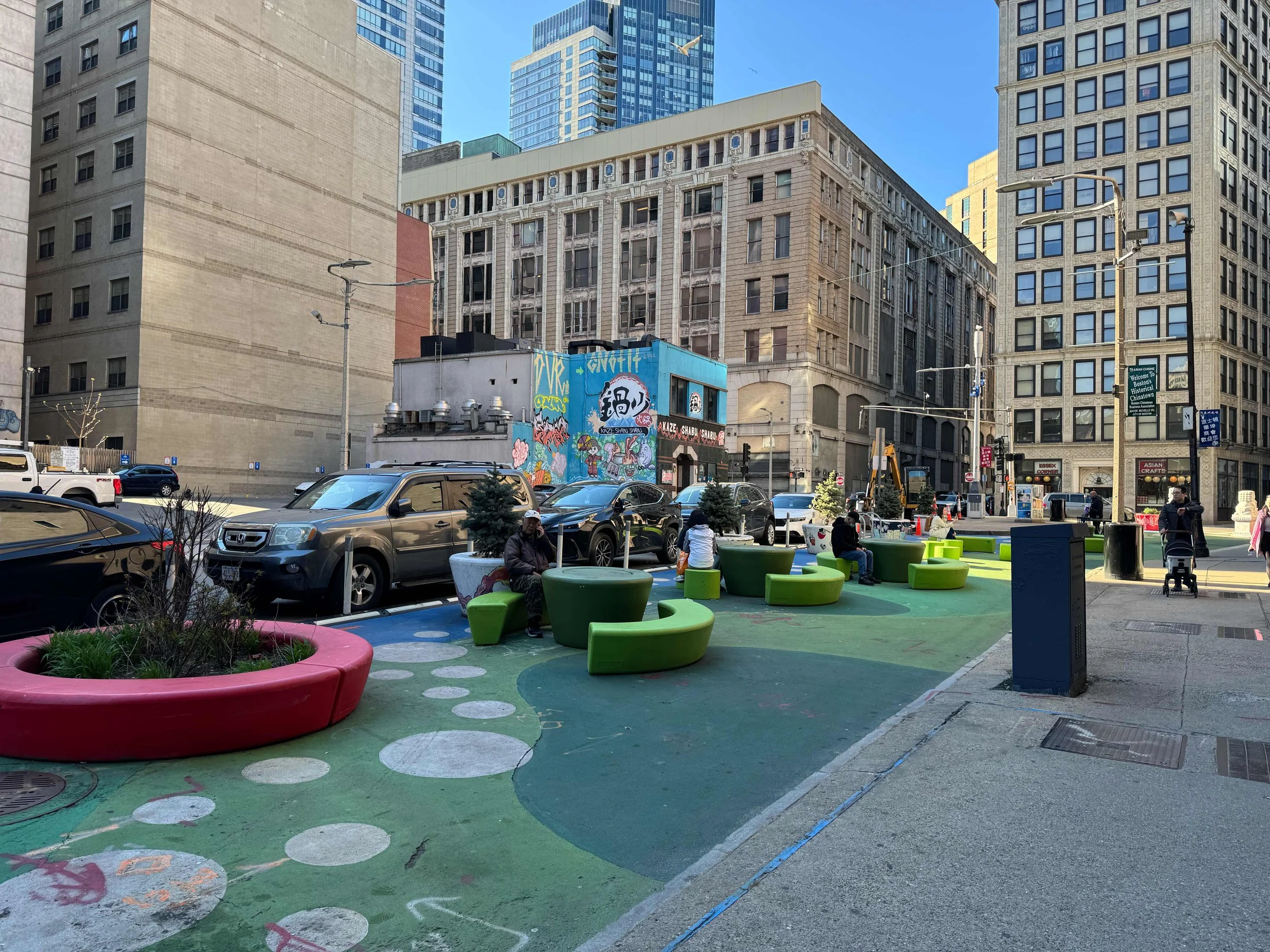
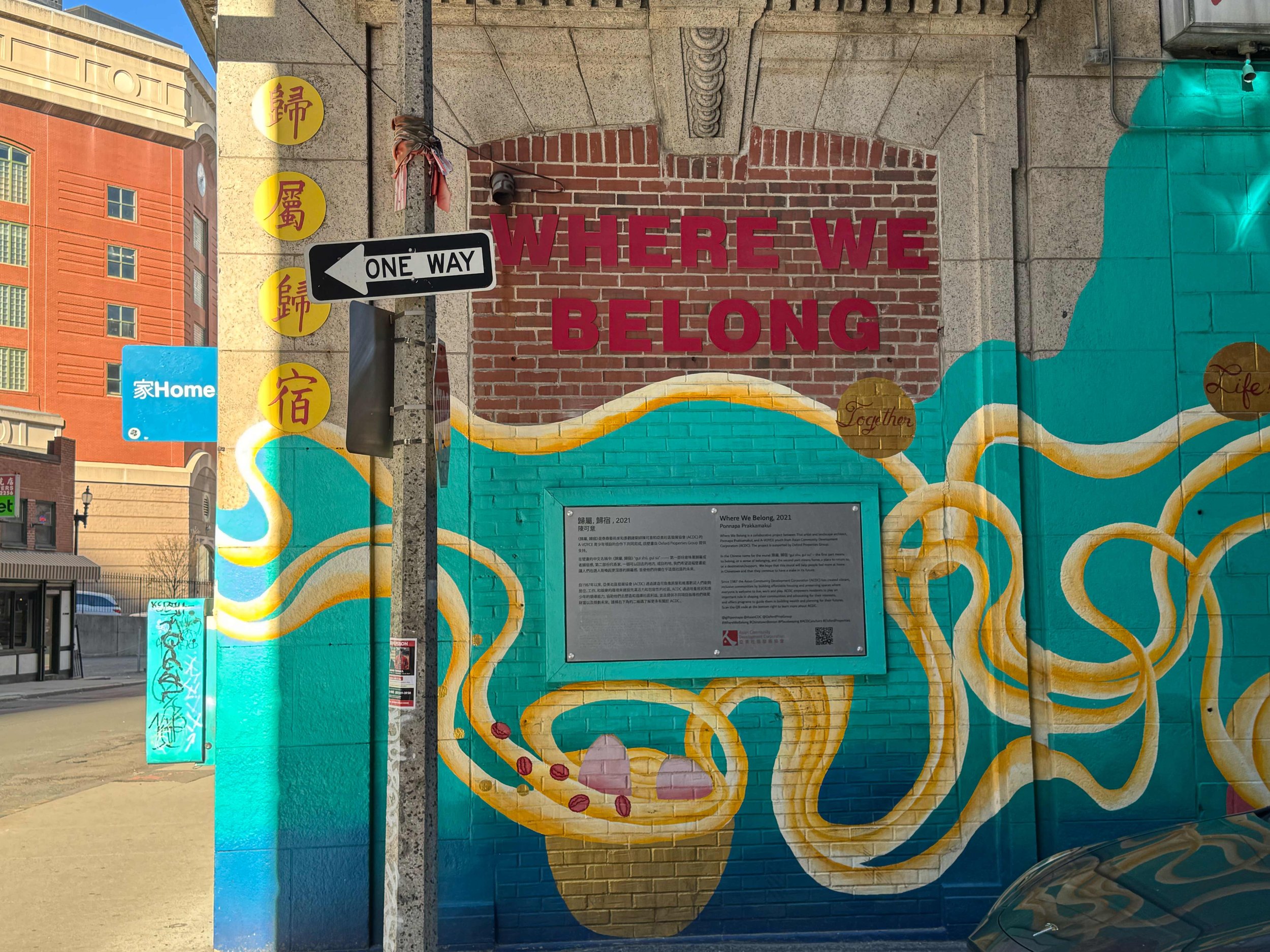
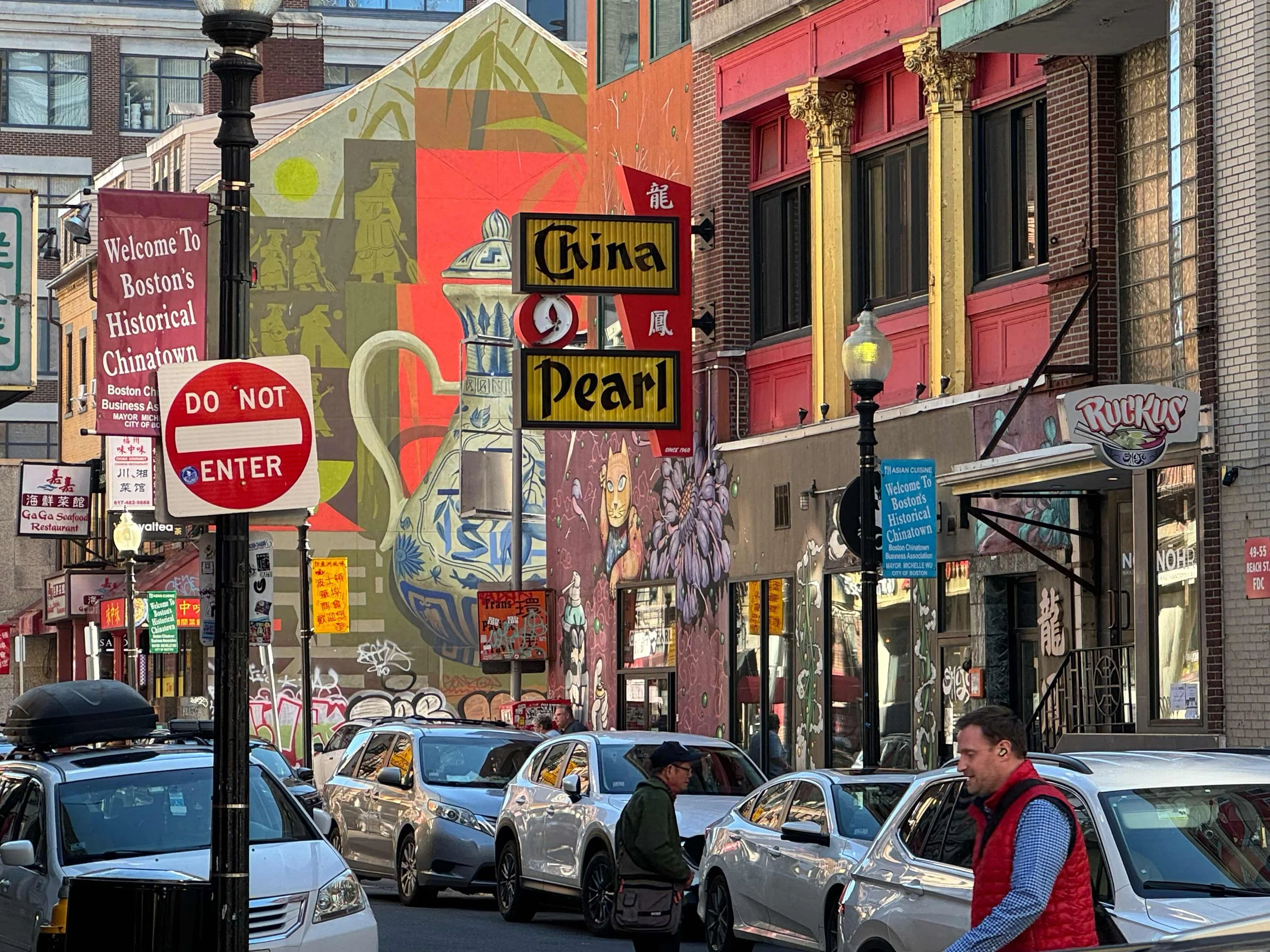
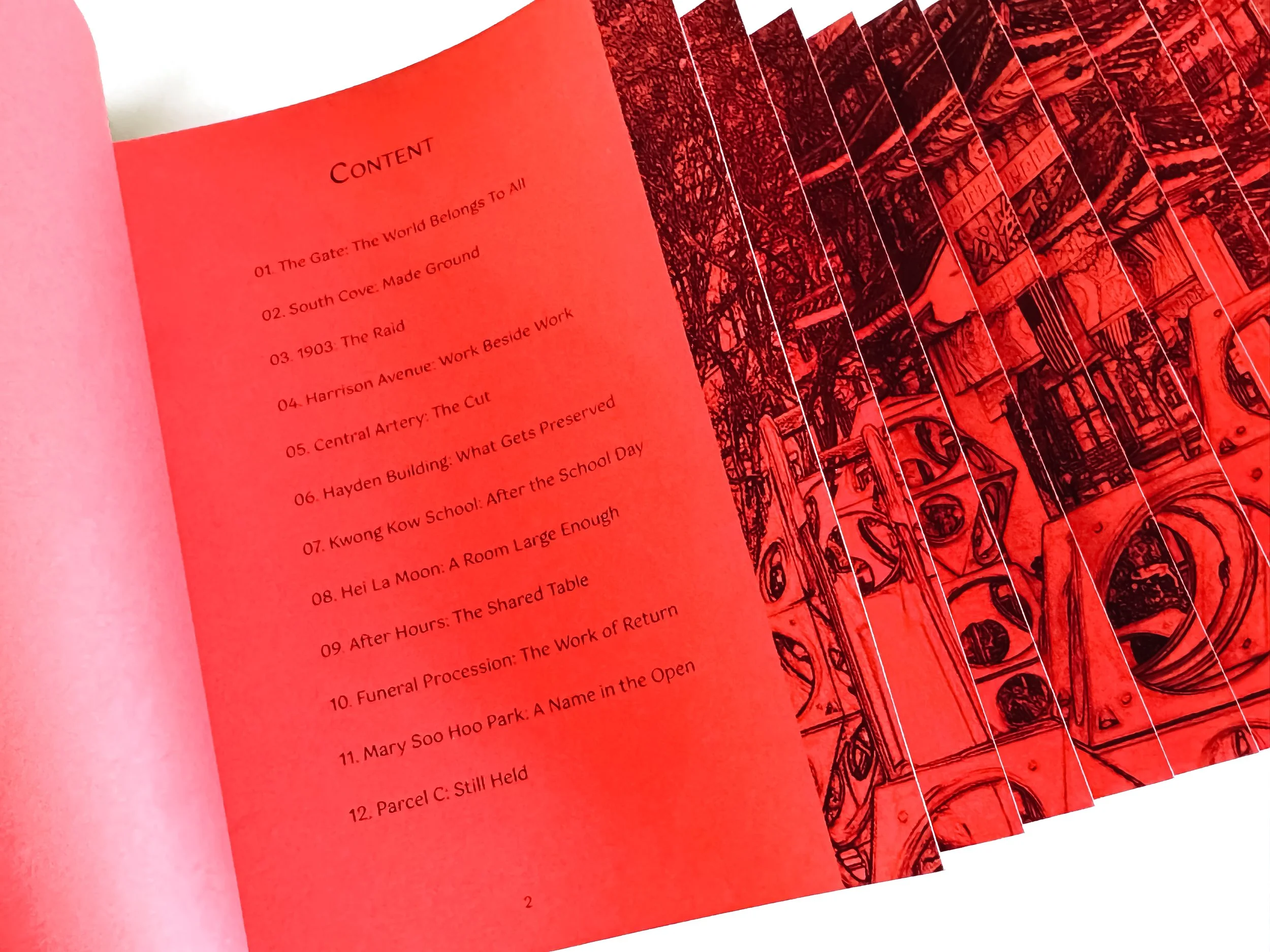
Across twelve focused chapters, the book moves from the paifang gate and South Cove’s made ground to the 1903 raid, the Central Artery, Kwong Kow School, Hei La Moon, Mary Soo Hoo Park, and Parcel C. Together, these views reveal a place repeatedly shaped by outside pressure and sustained by everyday forms of continuity: language, labor, food, ritual, public memory, and community organizing.
Boston!
The Next?
New York!
The Next?
San Francisco!
Los Angeles!
Stay Tuned!
The Next?
Honolulu!
Boston! The Next? New York! The Next? San Francisco! Los Angeles! Stay Tuned! The Next? Honolulu!
Exhibition & Collection