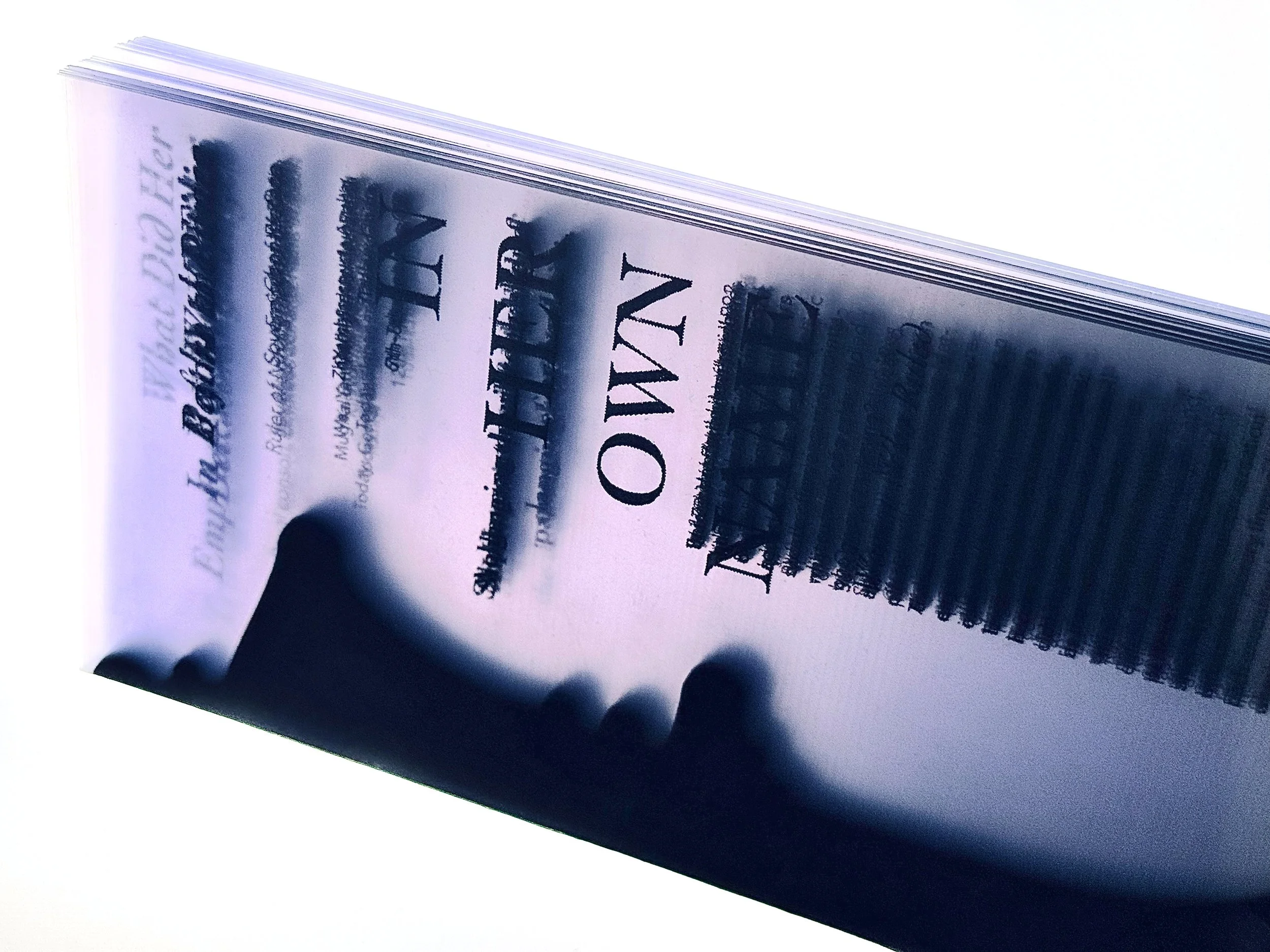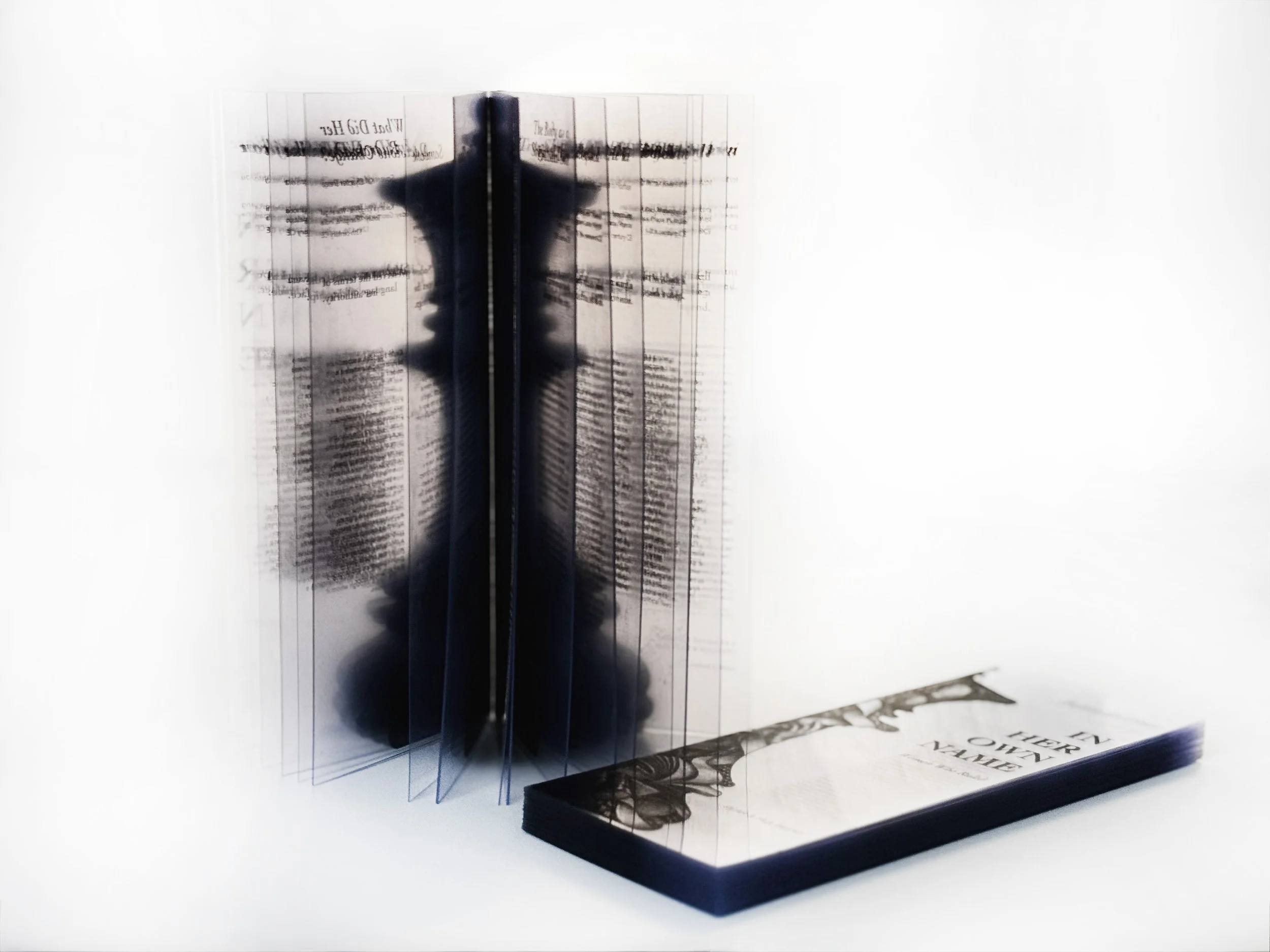
In Her Own Name: Women Who Ruled
INTRIDUCTION
A name struck into silver. A figure carved in stone. An account carried into print.
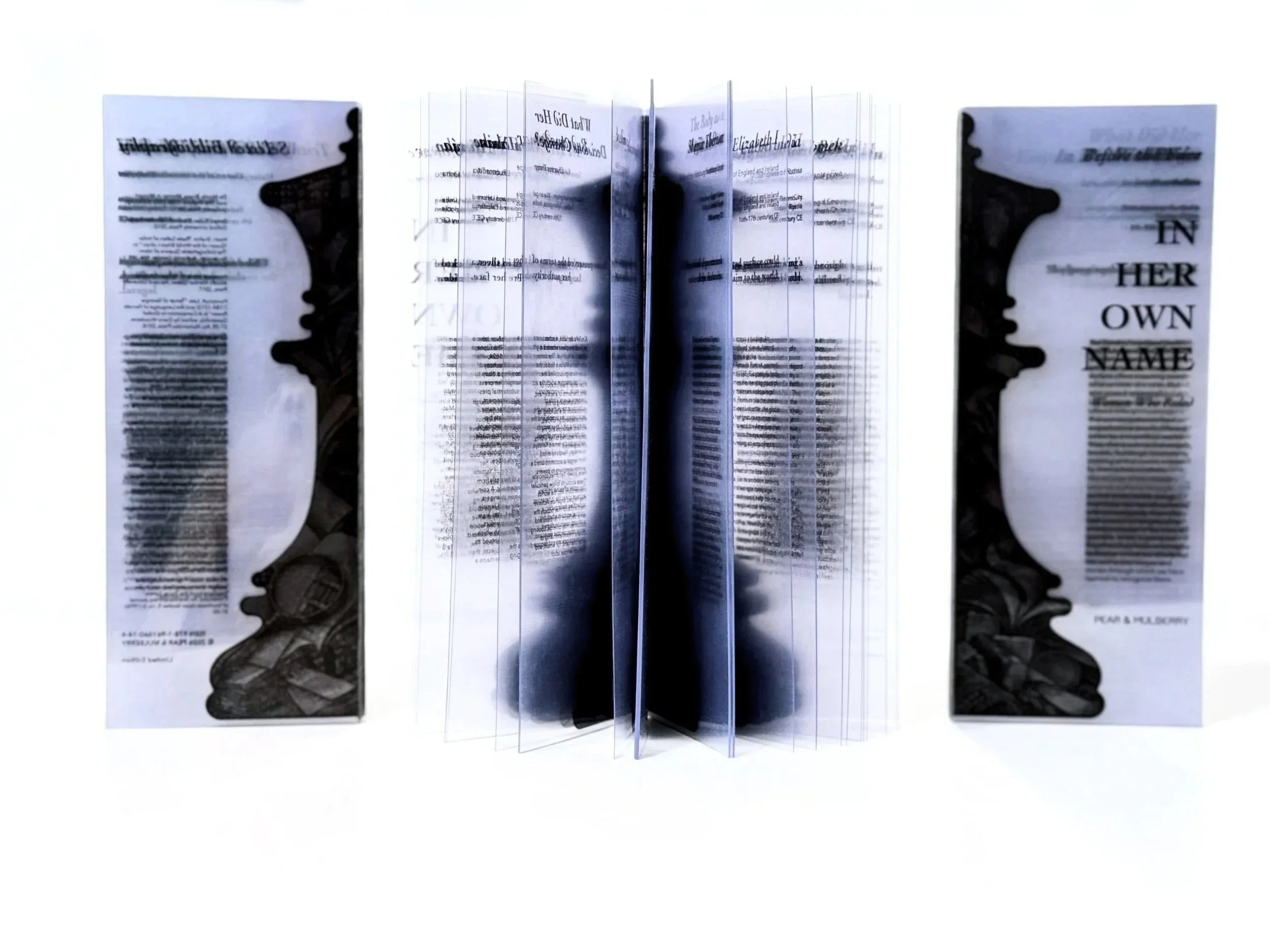
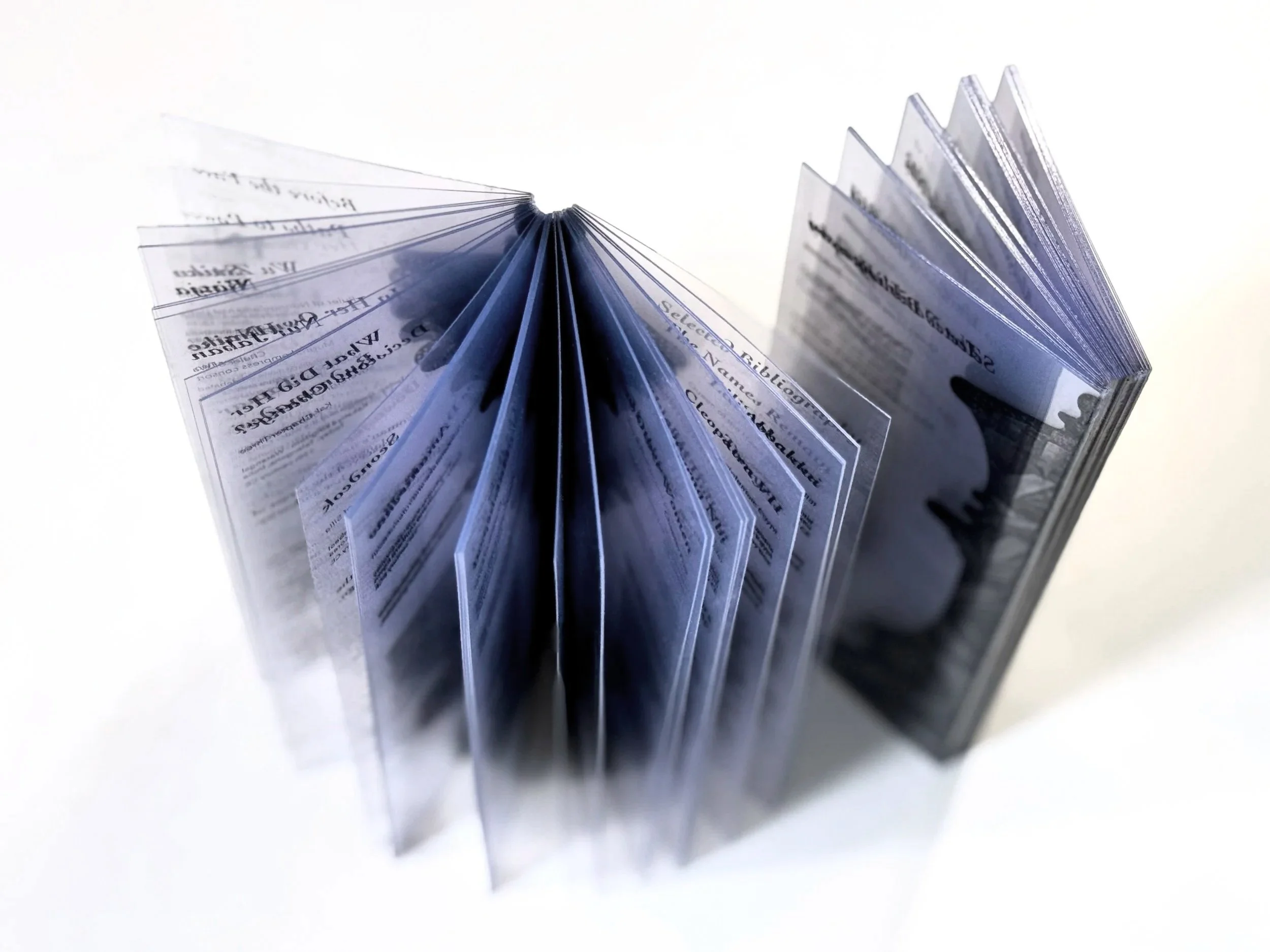
Women’s authority has taken many forms, leaving traces that survive unevenly across time. In Her Own Name gathers twenty-six stories into a sculptural book, bringing individual political lives into conversation through transparent pages and the shared silhouette of a chess queen. Together, they invite a closer look at who could govern, whose judgment mattered, and how we came to remember them.
INSPIRATION
Within the Queen’s Outline
The chess queen gives the work a familiar point of entry: a female figure with the capacity to move, intervene, and alter the field around her.
Within that outline, the book gathers titles belonging to very different political worlds—emperor, pharaoh, sultan, regent, iyoba. Each carries its own institutions, obligations, and conditions of recognition. The repeated silhouette holds these histories together, while the names and stories within it preserve the differences that the word “queen” cannot contain.
HISTORICAL AND FEMINIST CONTEXT
The Reach of Her Decisions
Placing women at the centre of political history changes the questions we ask. How did they gain the authority to act? Through whose cooperation did a decision become possible? Who lived with its consequences?
The book follows power into land, education, diplomacy, warfare, building, and patronage. Its feminist perspective gives women’s judgment and political agency sustained attention, while examining the hierarchies they inhabited and maintained. A woman’s rise could open possibilities alongside new obligations, exclusions, or costs. Recognition begins a more demanding encounter with the life that follows.
CURATORIAL APPROACH
Where Power Leaves a Trace
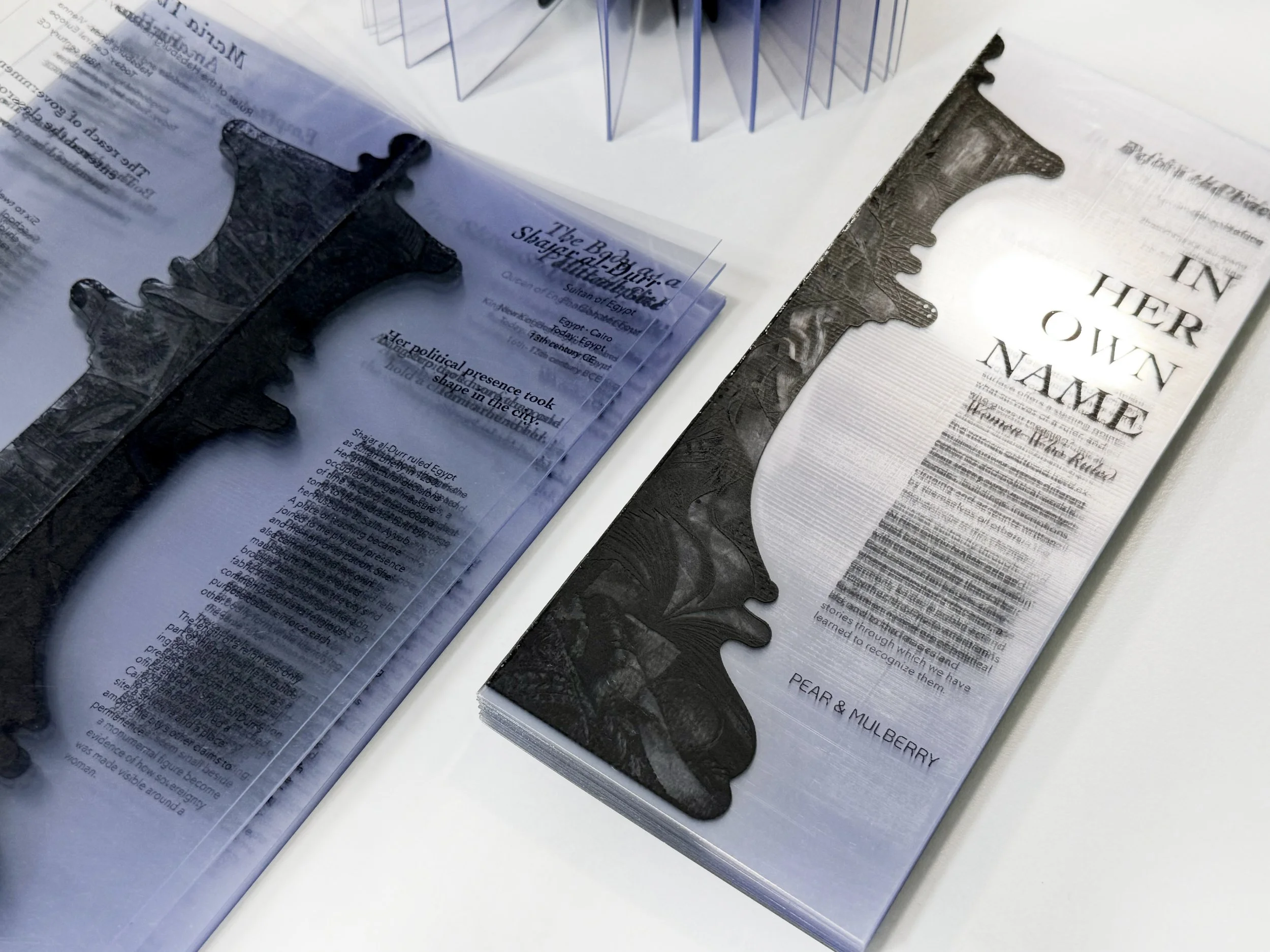
A small object can open onto a much larger political world. Nur Jahan’s name on a coin brings authority into circulation. Hatshepsut’s royal dress and the language of her inscriptions reveal different ways of making sovereignty recognizable. A building commissioned by Shajar al-Durr gives political memory a place in the city.
These details shape the book’s approach to storytelling. Each entry begins close to something particular, allowing a material trace to lead toward the relationships, conventions, and decisions around it.
RECORDS AND REMEMBRANCE
The Record Has Many Hands
Wu Zetian’s stele, initially without a commemorative inscription, later received the words of others. Centuries afterward, Liliʻuokalani brought her own account into print following the overthrow of the Hawaiian monarchy. Between these different acts of inscription lies a question that runs through the book: who gives a political life its surviving form?
Chronicles, monuments, portraits, and memoirs carry particular perspectives. Later remembrance adds further layers. The book keeps those acts of telling in view, making room for achievement and contradiction, documented action and unresolved questions.
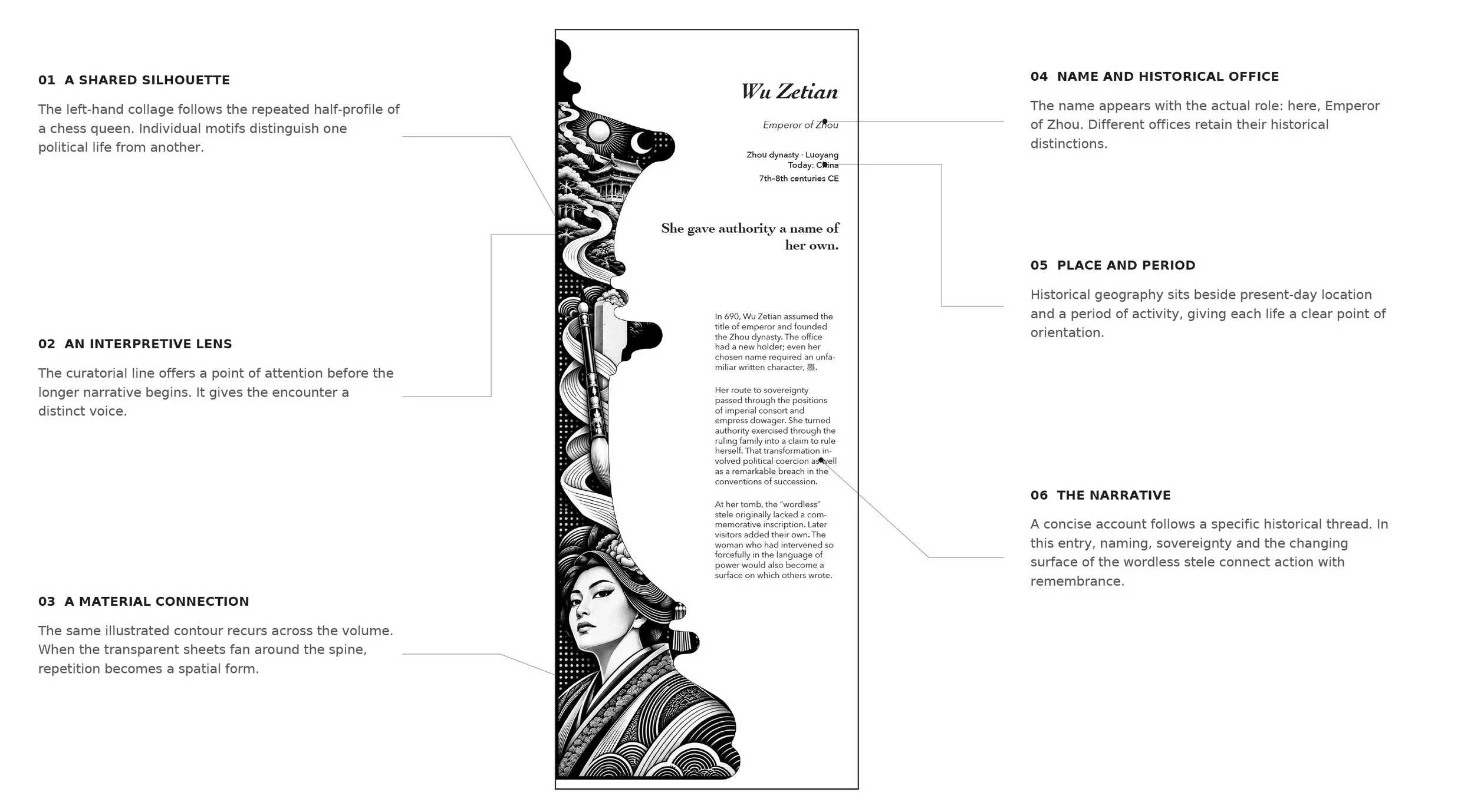
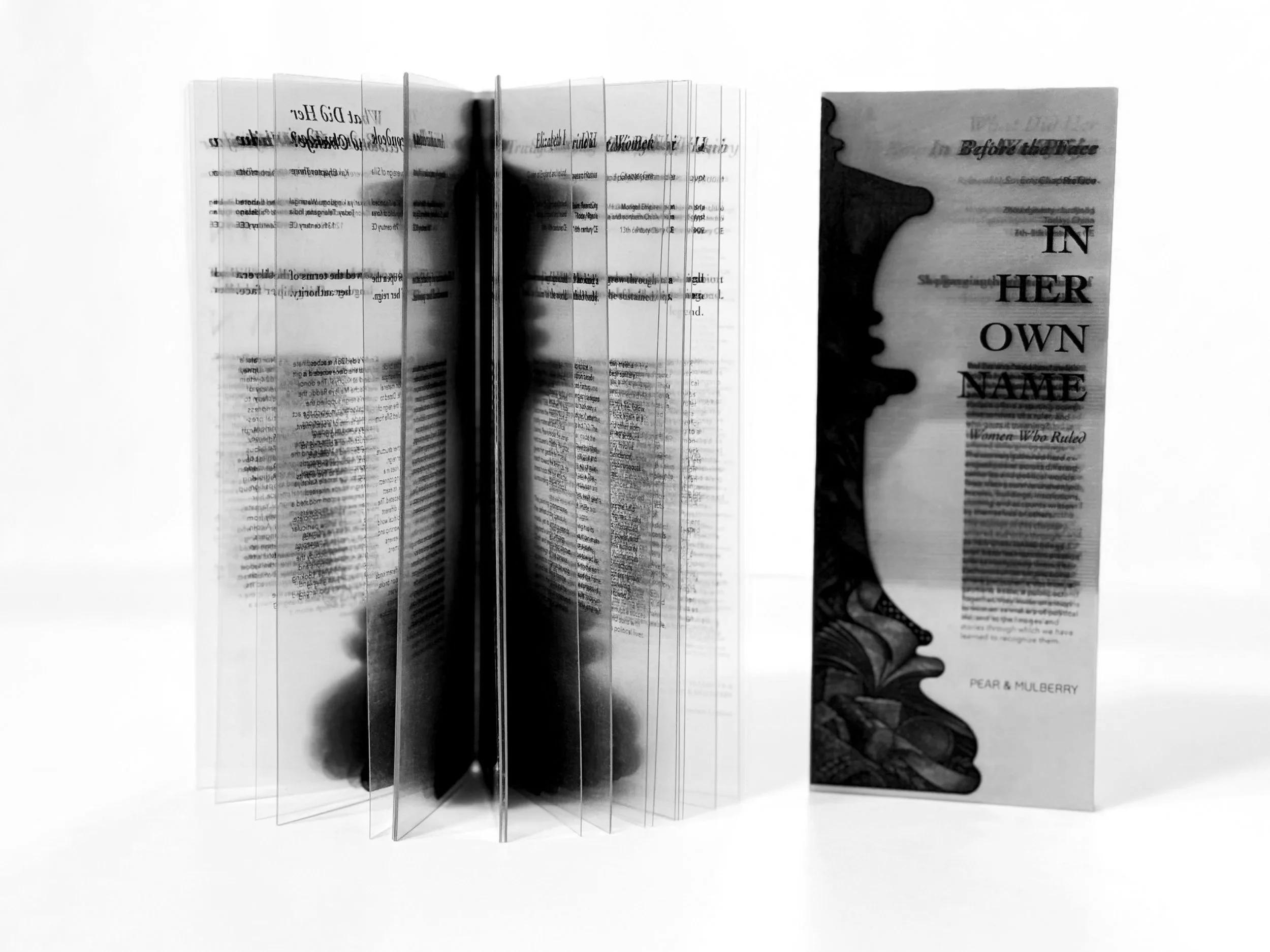
ILLUSTRATION AND INTERPRETATION
An Image Through Which to Look
The illustrations assemble faces, architecture, garments, objects, and landscapes into contemporary visual interpretations. Each composition draws the eye toward the circumstances of a political life, extending the encounter beyond a ruler’s appearance.
The accompanying texts and selected bibliography provide a route back toward historical evidence and scholarship. Where a likeness is uncertain or a story reaches us through later tradition, that distance remains part of the encounter. The image offers a way into the history while leaving its open questions visible.
BOOK DESIGN AND MATERIAL
History in the Space Between Pages
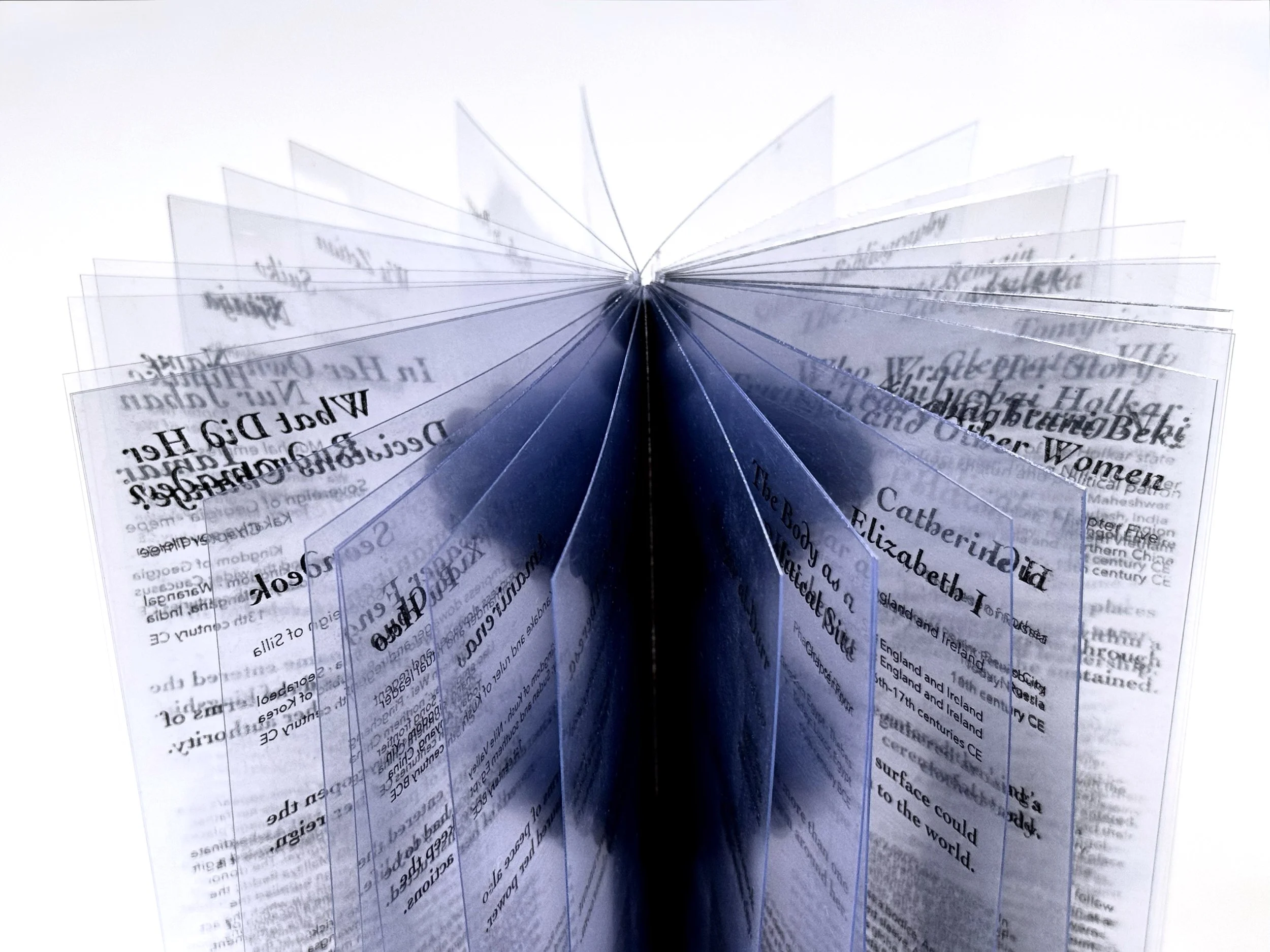
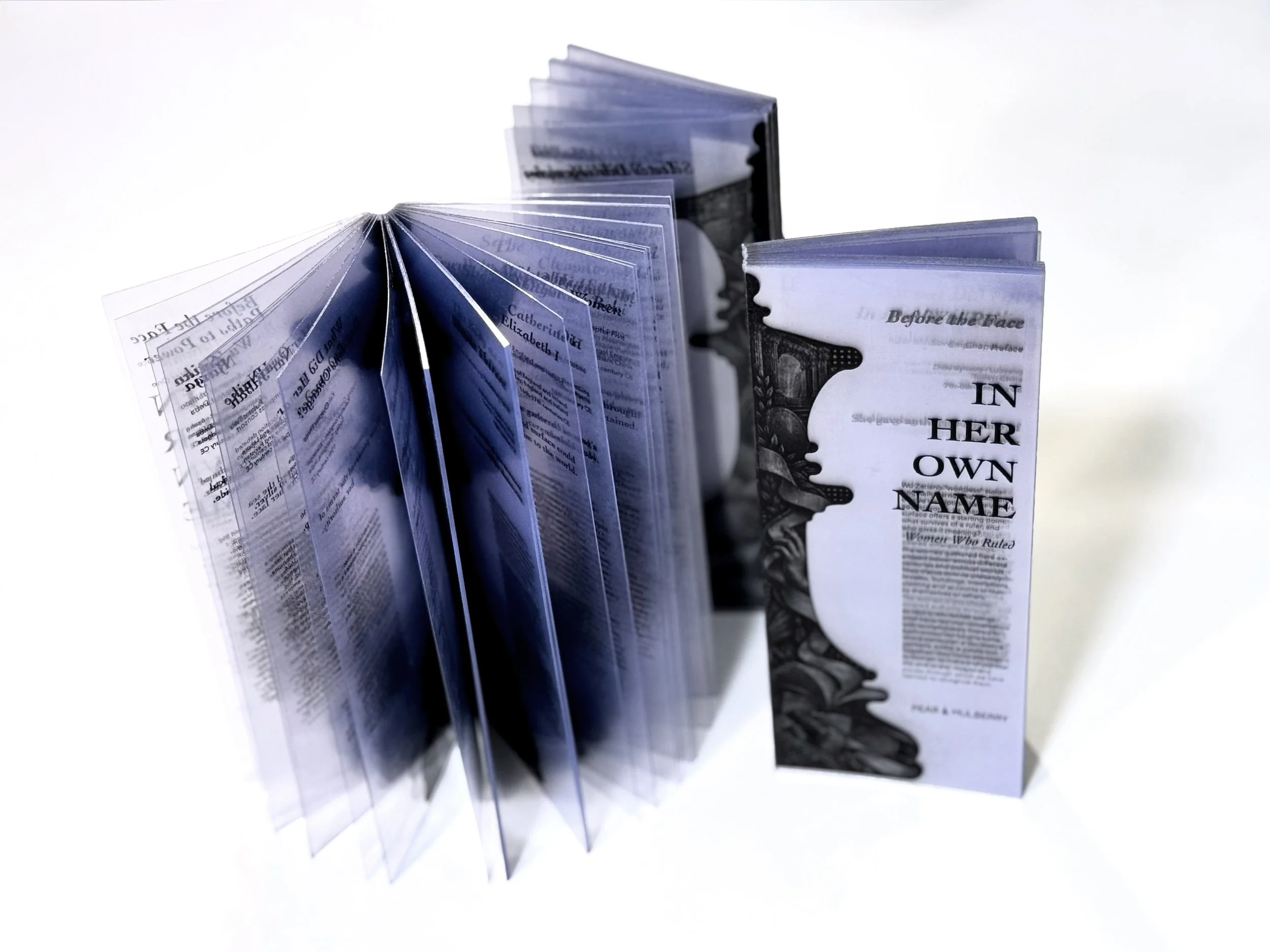
Transparency makes looking an active part of reading. Images accumulate through the PET sheets; a page lifted from the others brings one story into focus. As the book opens, the reader continually adjusts the relationship between an individual life and the histories surrounding it.
The binding extends this movement into space. Pages fan around the spine, gathering into a freestanding chess queen. A sequence of intimate encounters becomes a sculptural presence, inviting the reader to move around the book as well as through it.
PROTOTYPING AND CONSTRUCTION
Making Room for Movement
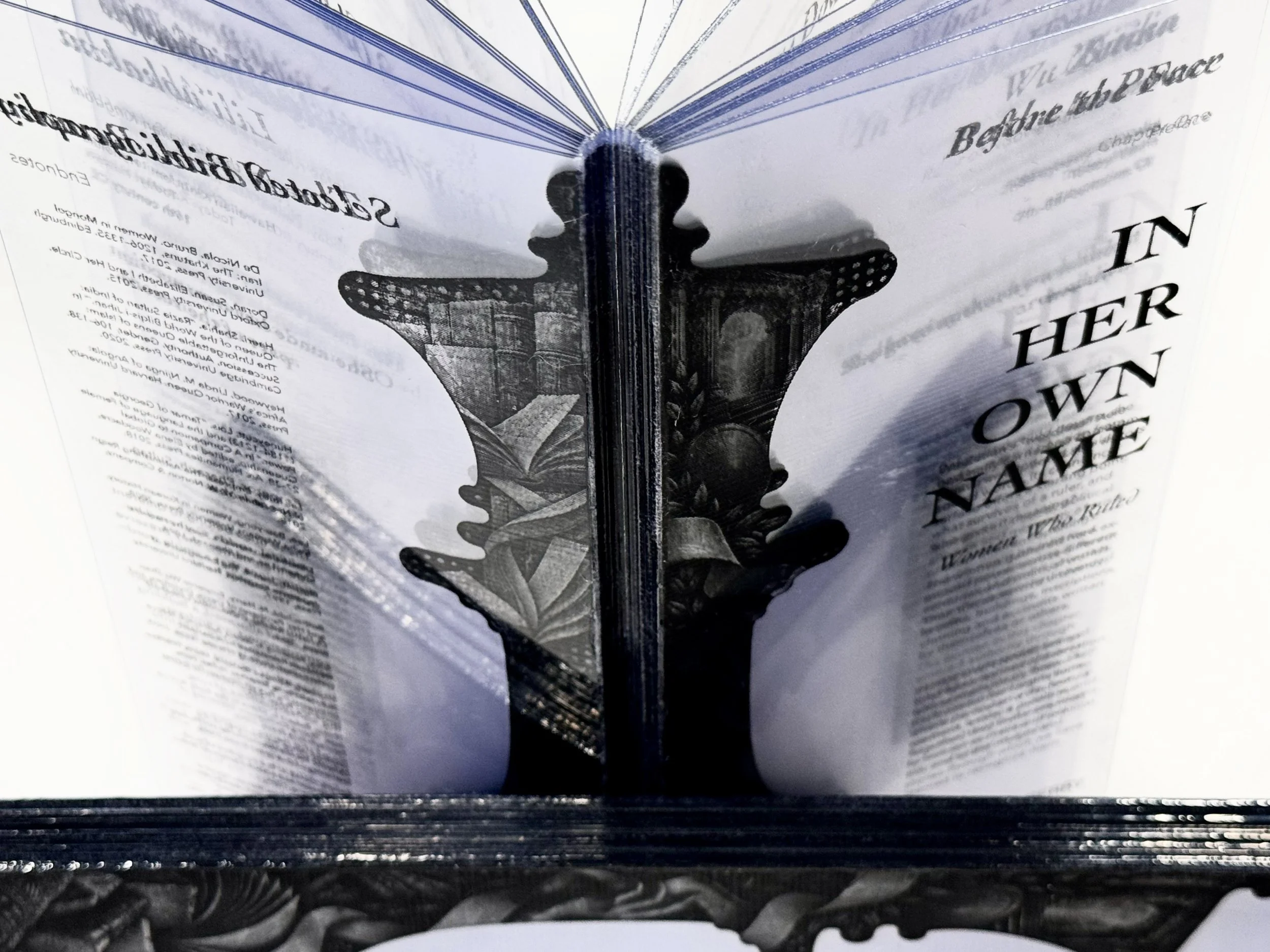
The book’s transformation depends on a narrow meeting place: the edge where each transparent sheet joins the spine.
Prototyping explored the relationship between adhesion, page alignment, and freedom of movement. Small changes at the binding edge affected how readily the sheets separated and how far they could open. The central challenge was to hold the volume together while giving each page room to turn—a structural problem that also echoes the work’s concern with individual lives within a collective form.
PUBLICATION DETAILS
In Her Own Name: Women Who Ruled
2026 · Edition of 10
36 pages, printed on 12 mil transparent PET
Custom binding allowing the pages to fan freely
Closed dimensions: 7 × 3.5 × 0.5 inches
ISBN 978-1-961660-14-4
Debuted November 1, 2026.
$580 · Accepting orders