Boston Chinatown: Held Between Arteries invites readers into one of America’s most compressed and resilient Chinatowns, a neighborhood where history gathers in a few dense blocks.
Across twelve focused chapters, the book moves from the paifang gate and South Cove’s made ground to the 1903 raid, the Central Artery, Kwong Kow School, Hei La Moon, Mary Soo Hoo Park, and Parcel C. Together, these views reveal a place repeatedly shaped by outside pressure and sustained by everyday forms of continuity: language, labor, food, ritual, public memory, and community organizing.
The book is the second title in PEAR & MULBERRY’s ongoing Chinatown series, following What We Keep, What Keeps Us: Chinatown, Between Thresholds, which serves as a broader introduction to Chinatown as a folded city of migration, work, ritual, language, and reinvention. With the Boston volume, the series turns toward city-specific histories and spatial conditions. Future volumes will continue through other U.S. Chinatowns, including New York, San Francisco, Honolulu, and Los Angeles, each approached through its own history, urban form, and community memory.
Materially, the Boston volume distinguishes itself through a curated Brick Ember red paper that echoes the city’s historic masonry, paired with a handmade back sheet carrying a high-contrast waved-line pattern. These choices give the book a specific Boston presence while maintaining the bold linocut-print graphic weight and sculptural reading experience of the series. As future city volumes join the collection, each book will carry its own local texture while remaining part of a larger visual and cultural archive.
Written in a poetic documentary voice, the book looks closely at how language, labor, food, ritual, public memory, and community organizing allow Boston Chinatown to keep making room where little was given.
Limited Edition of 24.
32 pages, 24 inch x 6 inch, Inverted dragon-scale binding (cn: 龙鳞装);
Pages: 24 lb kraft paper;
Back sheet: hand-made cotton paper.
Boston Chinatown: Held Between Arteries invites readers into one of America’s most compressed and resilient Chinatowns, a neighborhood where history gathers in a few dense blocks.
Across twelve focused chapters, the book moves from the paifang gate and South Cove’s made ground to the 1903 raid, the Central Artery, Kwong Kow School, Hei La Moon, Mary Soo Hoo Park, and Parcel C. Together, these views reveal a place repeatedly shaped by outside pressure and sustained by everyday forms of continuity: language, labor, food, ritual, public memory, and community organizing.
The book is the second title in PEAR & MULBERRY’s ongoing Chinatown series, following What We Keep, What Keeps Us: Chinatown, Between Thresholds, which serves as a broader introduction to Chinatown as a folded city of migration, work, ritual, language, and reinvention. With the Boston volume, the series turns toward city-specific histories and spatial conditions. Future volumes will continue through other U.S. Chinatowns, including New York, San Francisco, Honolulu, and Los Angeles, each approached through its own history, urban form, and community memory.
Materially, the Boston volume distinguishes itself through a curated Brick Ember red paper that echoes the city’s historic masonry, paired with a handmade back sheet carrying a high-contrast waved-line pattern. These choices give the book a specific Boston presence while maintaining the bold linocut-print graphic weight and sculptural reading experience of the series. As future city volumes join the collection, each book will carry its own local texture while remaining part of a larger visual and cultural archive.
Written in a poetic documentary voice, the book looks closely at how language, labor, food, ritual, public memory, and community organizing allow Boston Chinatown to keep making room where little was given.
Limited Edition of 24.
32 pages, 24 inch x 6 inch, Inverted dragon-scale binding (cn: 龙鳞装);
Pages: 24 lb kraft paper;
Back sheet: hand-made cotton paper.
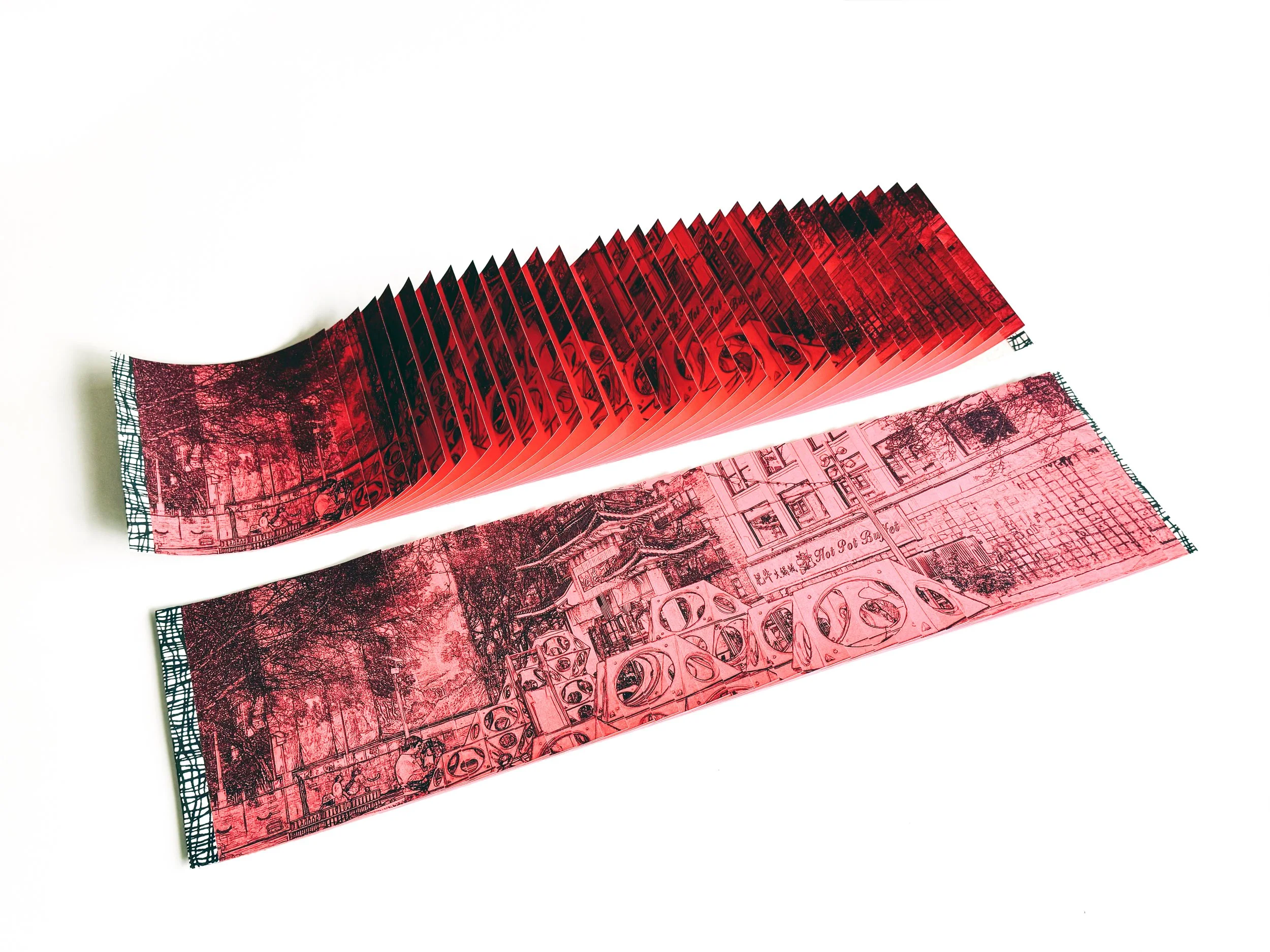 Image 1 of 11
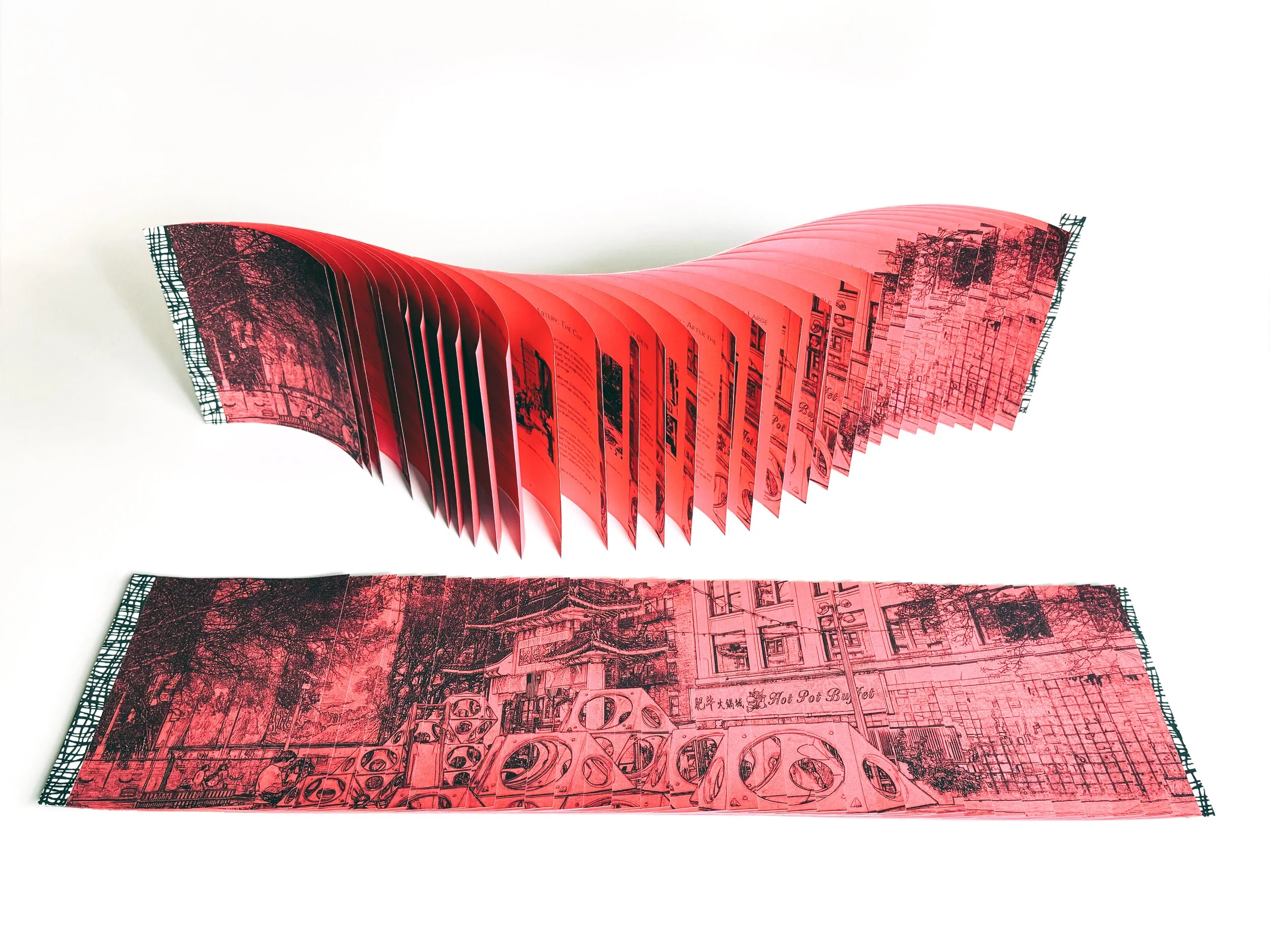 Image 2 of 11
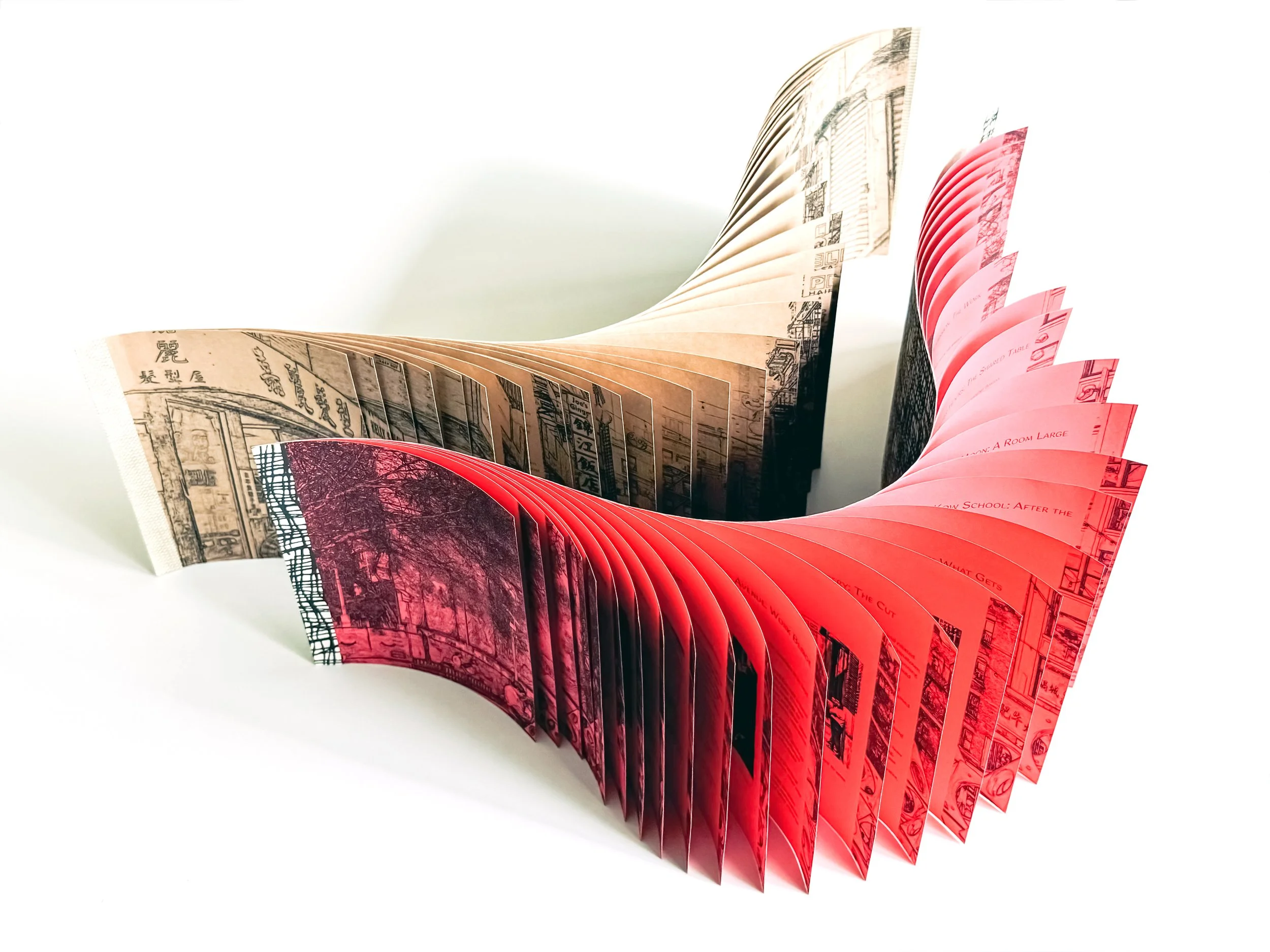 Image 3 of 11
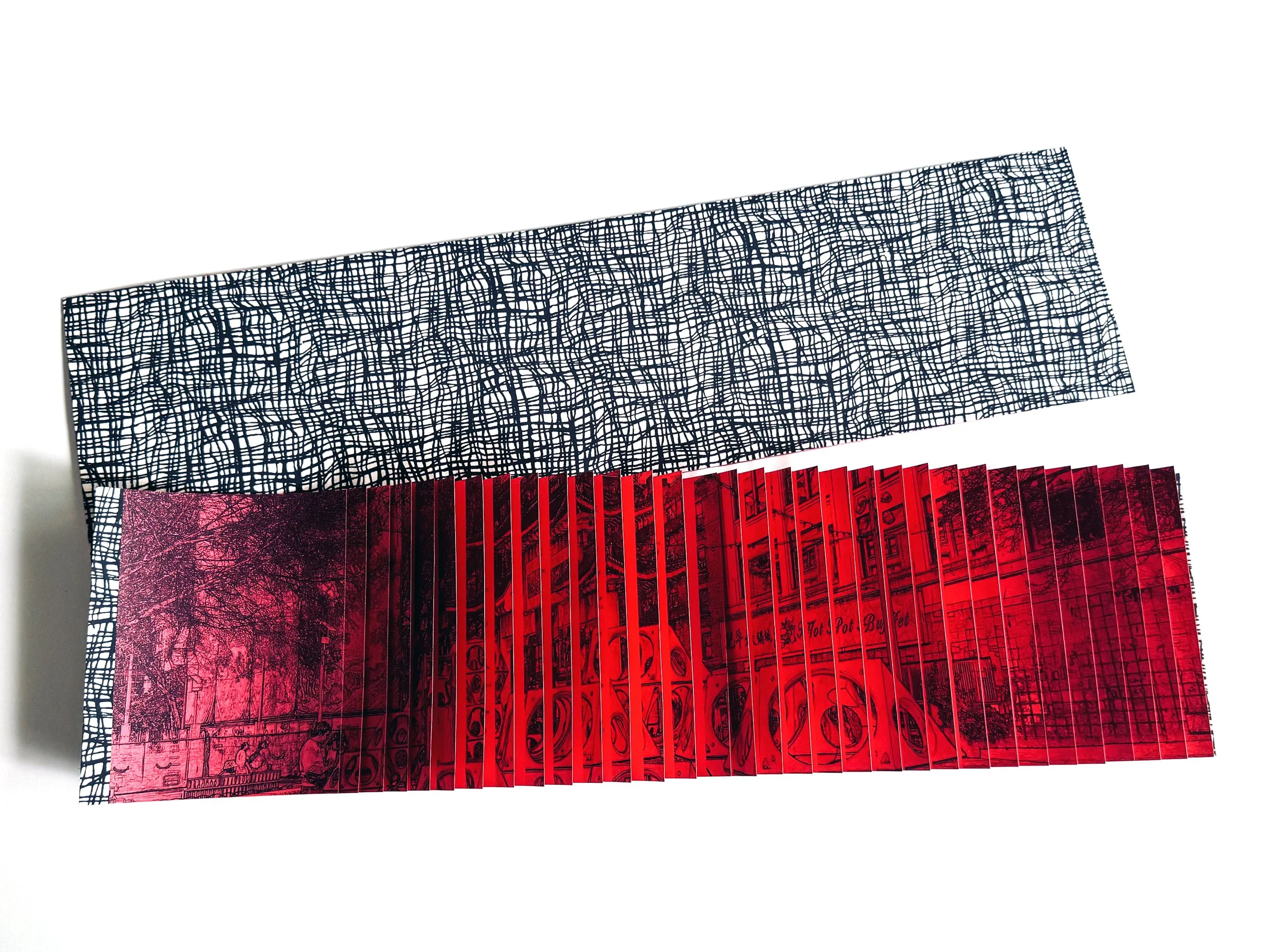 Image 4 of 11
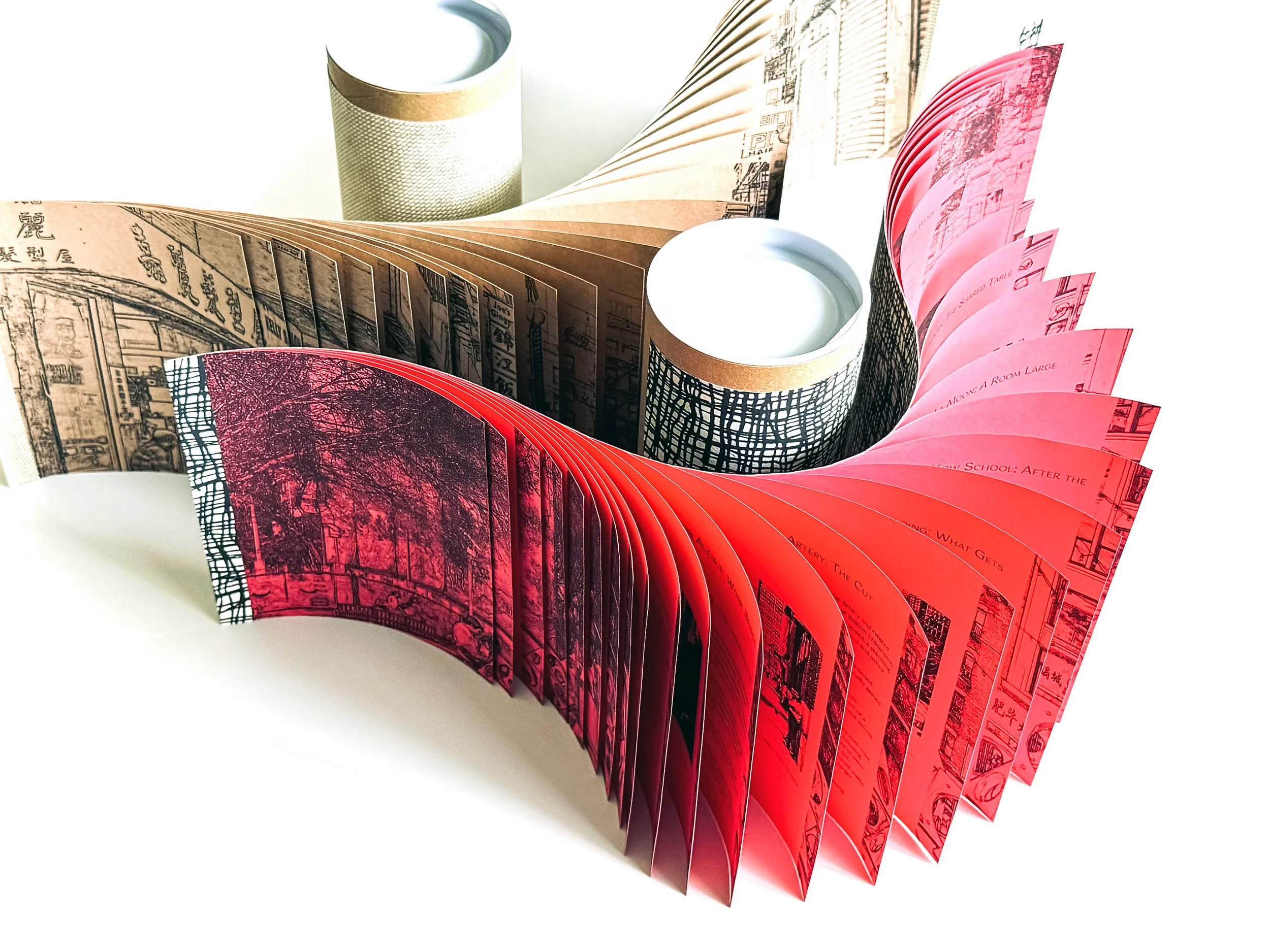 Image 5 of 11
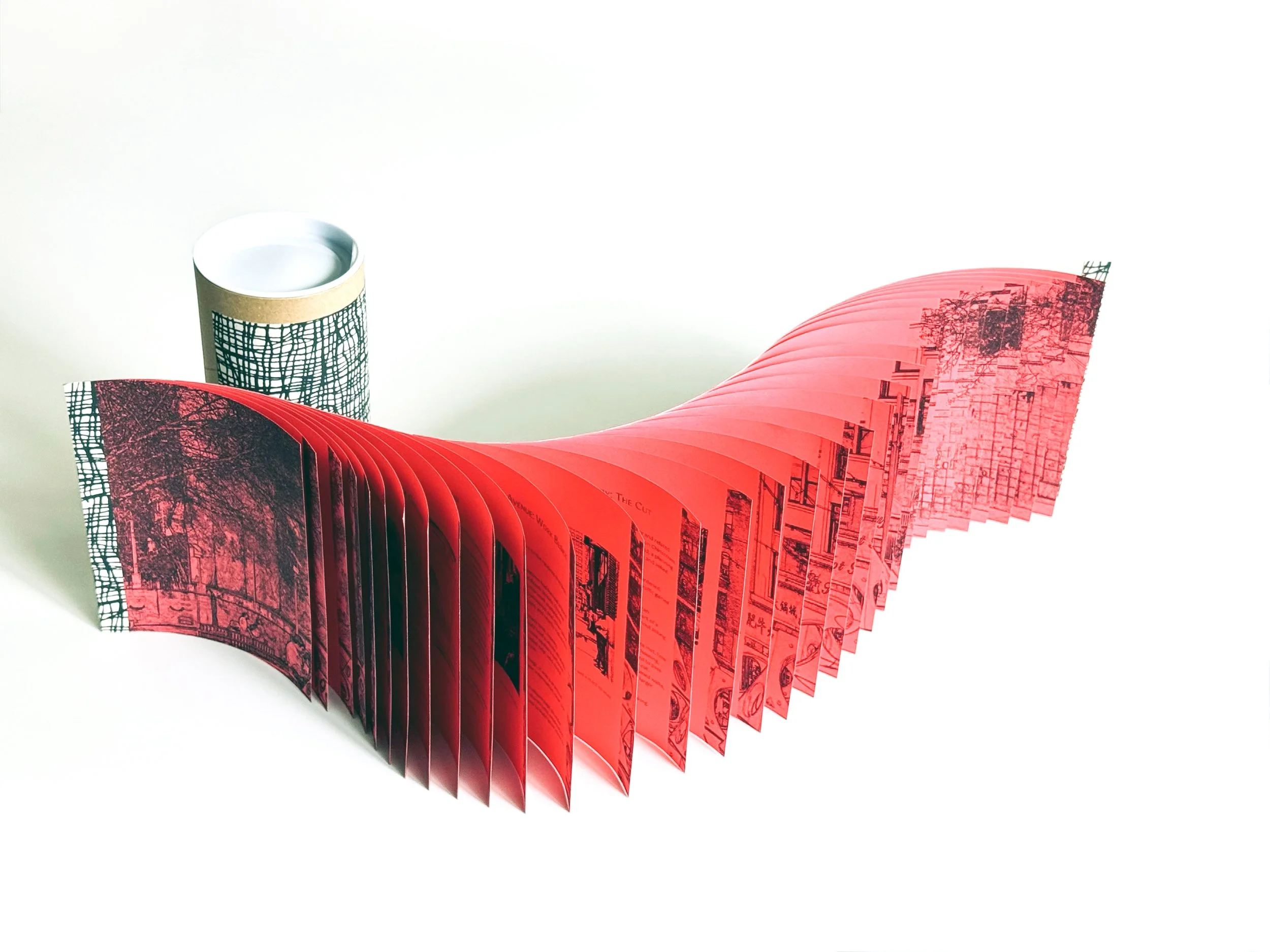 Image 6 of 11
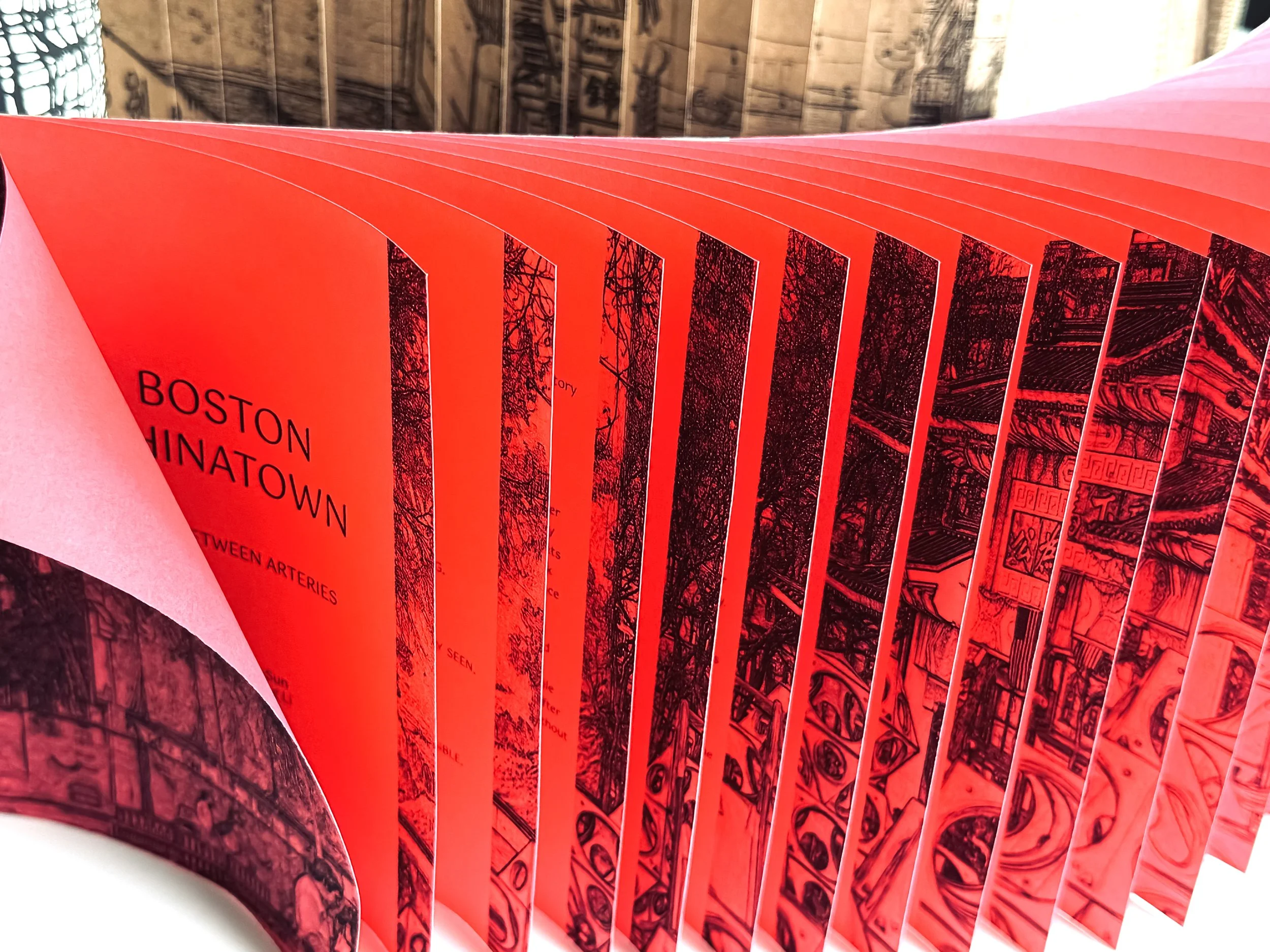 Image 7 of 11
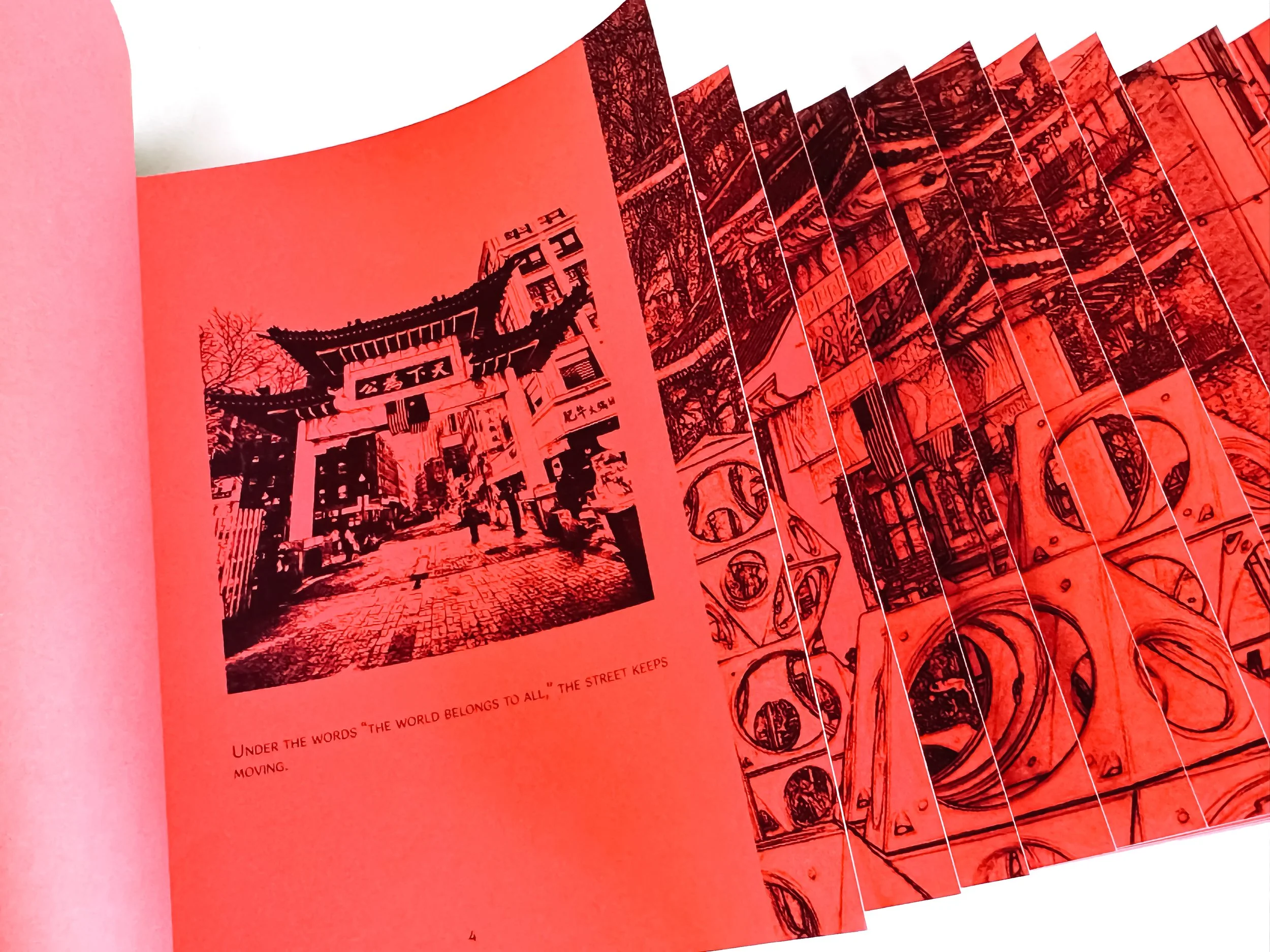 Image 8 of 11
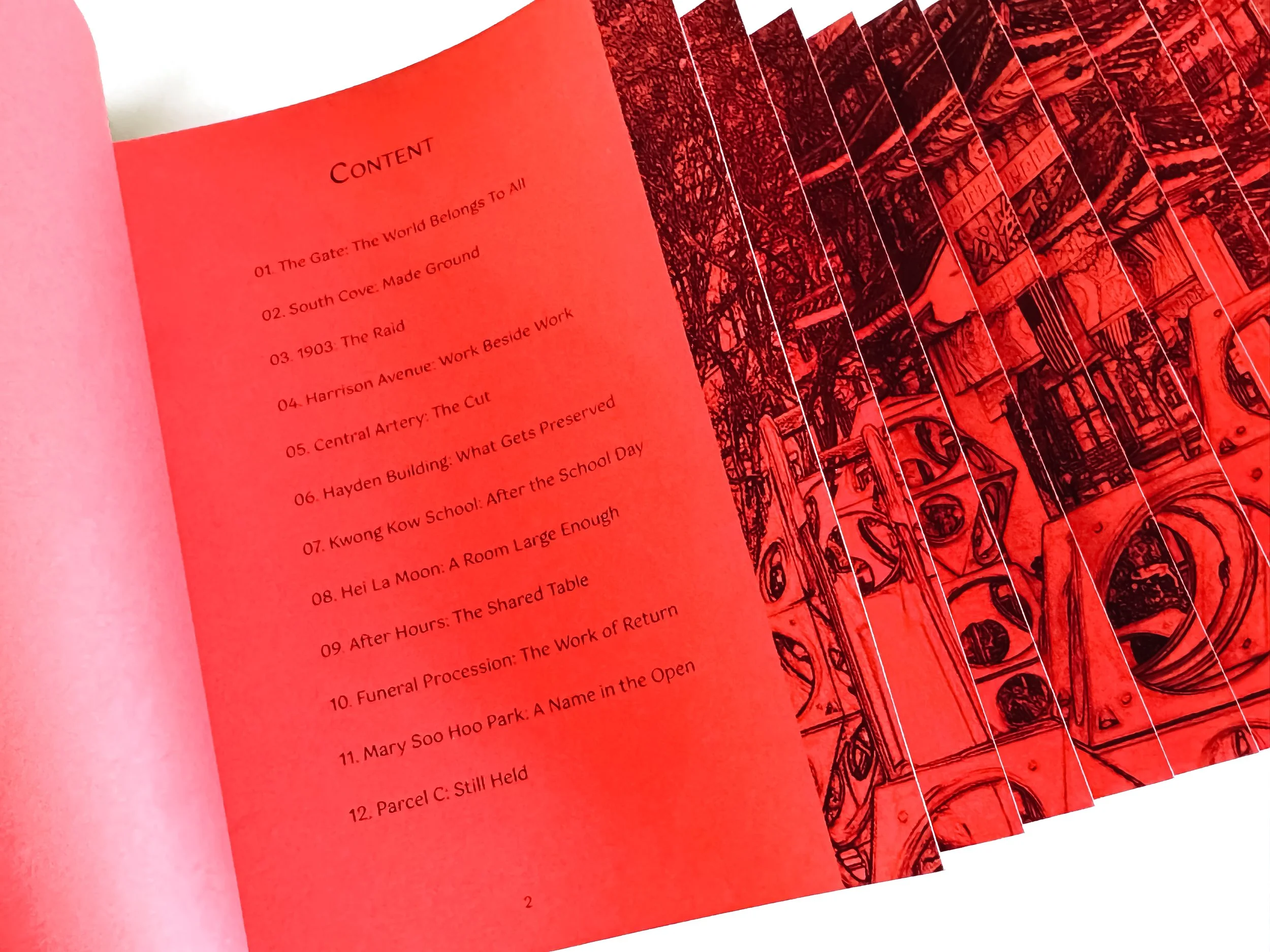 Image 9 of 11
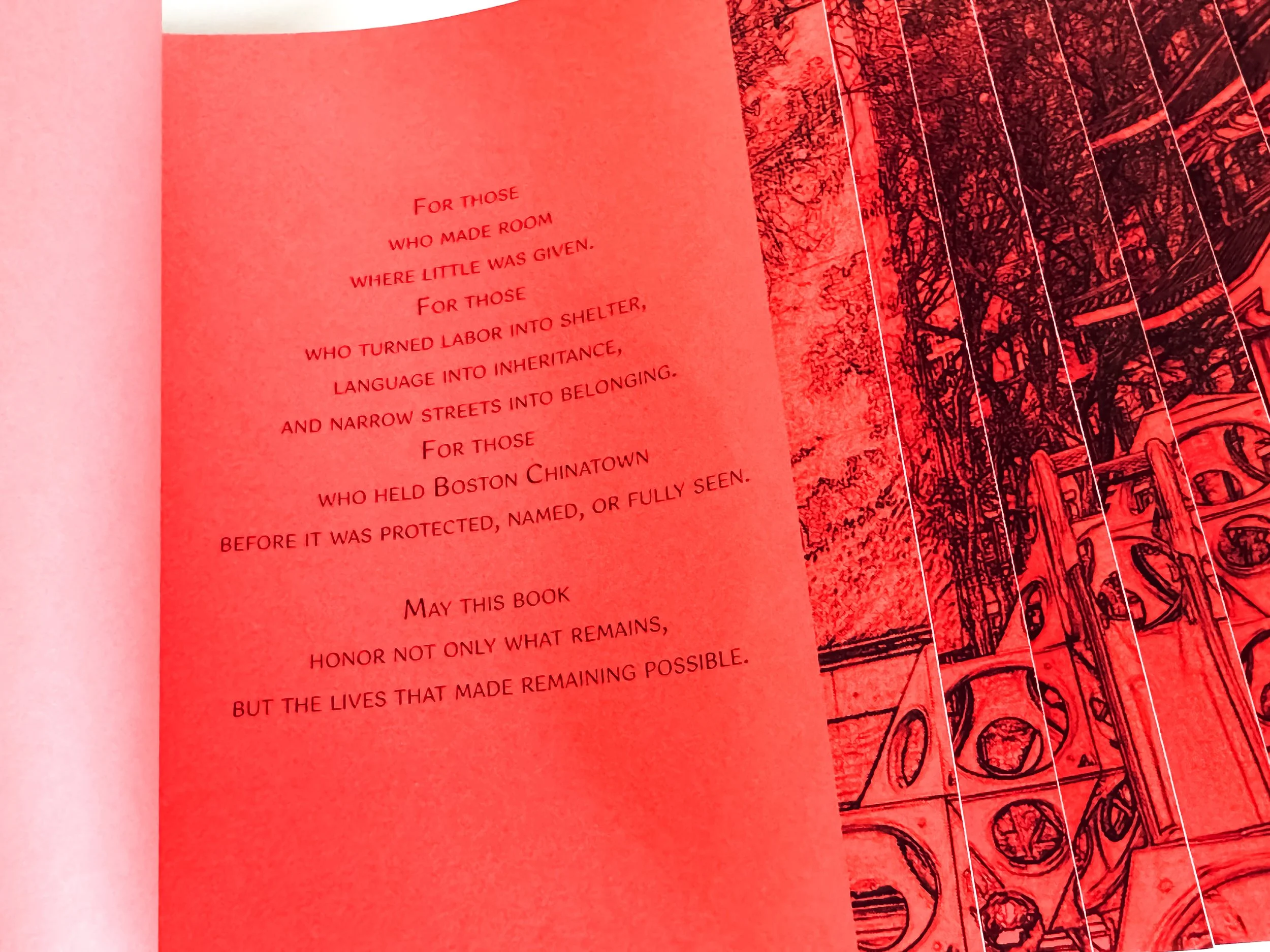 Image 10 of 11
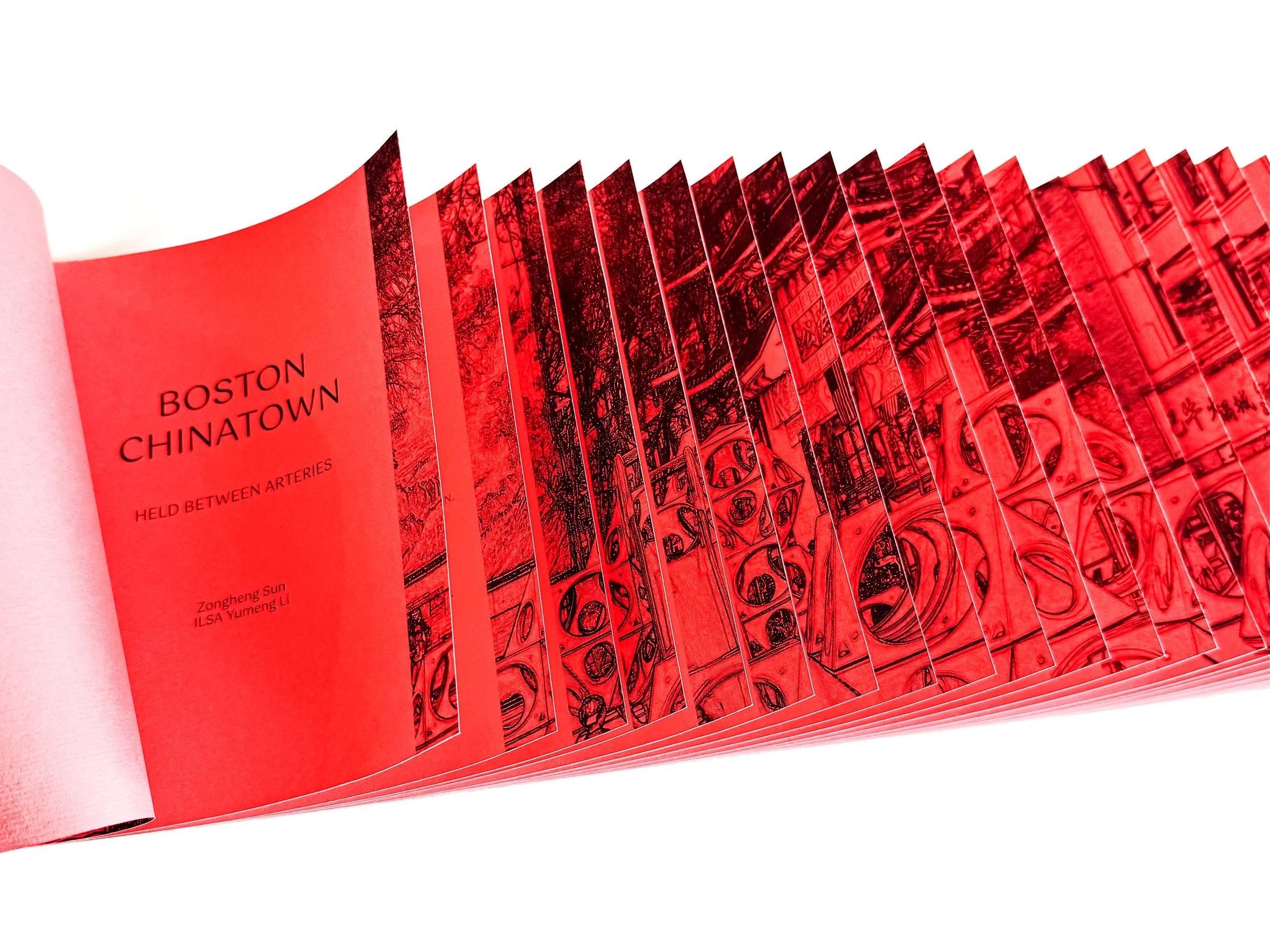 Image 11 of 11